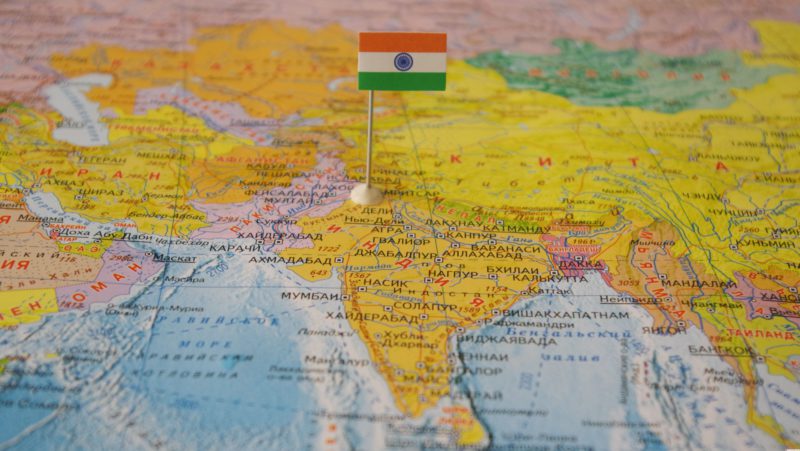
15.03.2026, India.
Scandals surrounding the sunken frigate and “permission” to buy oil, closed restaurants, and 50,000 evacuees — this is the price of someone else’s conflict for a country that is not at war with anyone. And India’s problems from the war in the Persian Gulf will only grow from here.
The war that began on February 28 in the Persian Gulf has had a major impact on the entire world, including those countries not directly involved in the conflict.
Among them is India, where in just over a week since the war began, numerous events triggered by the new conflict have already occurred.
Rising oil and gas prices
India is the world’s third-largest importer and consumer of oil, depending on imports for 85% of its needs. However, the country has reserves of more than 250 million barrels of crude oil and products. This gives India a buffer roughly equivalent to 7-8 weeks of supply.
At the same time, an anonymous Indian official emphasized to the media that the country would not participate in the International Energy Agency’s initiative to release strategic oil reserves aimed at lowering global crude prices. He noted that India plans to use its own reserves only in cases of problems with external supplies.
Country officials emphasize that despite the rise in global prices for gasoline and diesel, there will be no sharp increase in fuel prices in India. Obviously, if the crisis drags on, consequences in the domestic market are unavoidable, but at the moment there are no fuel problems in the country.
However, interruptions in natural gas supplies are already being felt. Qatar, India’s largest supplier, which covered up to 40% of the country’s needs, has completely halted supplies. The Indian government has already announced that the highest priority will be given to household consumers who use gas for cooking. Only after their needs are met will the remaining gas be redistributed among other categories.
Second priority for gas supply will go to the fertilizer production sector. The government promises to meet at least 70% of its needs based on the average demand over the last six months. Gas supplies to tea plantations, manufacturing enterprises, and other industrial consumers are categorized as third priority.
To prevent panic demand from consumers, the minimum waiting period for ordering a domestic LPG cylinder refill has been increased from 15 to 25 days. According to government estimates, a typical household consumes one cylinder in 50-55 days, so this measure will not cause particular inconvenience to household consumers.
Commercial enterprises, however, are already facing problems. For instance, the Bangalore Hotel Association warned that only 10% of the city’s hotels and restaurants have received LPG supplies, so most small and medium-sized food service establishments may soon close.
For a long-term solution, the Indian government is seeking new sources of liquefied gas supply. The option of sending Navy ships to escort tankers from the Persian Gulf is also being considered.
The problem of Indian migrants in the Middle East
Over 9 million Indians work in the Persian Gulf countries. They are employed in construction, the hotel business, healthcare, and the service sector. These migrants annually send back to India about 40% of all remittances from Indians working abroad — around $50 billion (3.95 trillion rubles).
Given the country’s significant trade deficit, these remittances are a major boost to the economy. If the war in the Persian Gulf drags on, it will undermine the revenues of the region’s oil monarchies, leading to a sharp drop in remittances and some problems for the Indian economy.
For now, another serious problem is associated with the migrants. Many of them have expressed a desire to evacuate from the war-torn region and return home. During the first week of March, about 50,000 Indians were evacuated from Persian Gulf countries, but there are many more willing to leave.
The situation with the sunken frigate returning from exercises
On the morning of March 4, approximately 40 miles south of Sri Lanka, an American submarine attacked and sank the Iranian frigate IRIS Dena. This incident marked the first successful torpedo attack since World War II. As a result of the attack, at least 87 Iranian sailors were killed, and 32 crew members were rescued from the stricken vessel.
Initially, it was surprising that the Iranian frigate was so far from its own waters. Later, Indian media answered this question. The warship was returning from the MILAN 2026 exercises conducted by India.
Former Indian Foreign Minister Kanwal Sibal clarified that under the exercise conditions, the ships were without ammunition, and noted that India bears a certain moral responsibility for the ship being sunk. It should be noted that the US Navy knew exactly that the ship was defenseless. The US initially agreed to participate in the exercises but withdrew its consent a few weeks before they began.
Two other Iranian warships, also returning from the exercises, requested berthing in Sri Lankan and Indian ports, citing technical problems, and thus avoided certain destruction.
Reaction of India’s muslim population
The size of India’s Muslim “minority” reaches approximately 220 million people. They are mostly Sunnis, with Shias comprising less than 10%, but Indian Muslims set aside interfaith differences and unequivocally condemned the attack on Iran and the killing of Ayatollah Khamenei.
The All India Muslim Personal Law Board publicly condemned the “open aggression” of the US and Israel against Iran, demanding immediate UN intervention and a ceasefire. A board representative expressed grief over the killing of Khamenei, calling his death a great loss for the entire Muslim world and a violation of international law.
On March 1, mass processions and rallies took place in many regions of India — in Delhi, Lucknow, the states of Uttar Pradesh, Bihar, Jammu and Kashmir, Telangana, and Tamil Nadu. Participants carried portraits of Khamenei, black flags, and chanted anti-American and anti-Israel slogans. The events were peaceful, but statements from several Muslim organizations and leaders criticized the government for not offering condolences on Khamenei’s death and not condemning the attack on Iran.
Indian opposition pressure on Modi
Indian Prime Minister Narendra Modi spoke very cautiously about the conflict, expressing concern and calling for a cessation of hostilities. On March 1, the politician called his Israeli counterpart Benjamin Netanyahu; at the same time, he has had no contact with the Iranian leadership during the conflict, at least not publicly. Media reported only three phone calls between the Indian and Iranian Foreign Ministers since the war began.
From the very start of the operation, the Indian government faced sharp criticism from the opposition. Politicians accused the country’s leadership of abandoning India’s “moral leadership.” MP Priyanka Gandhi from the Indian National Congress party wrote an article published in one of India’s central newspapers. In it, she called the “targeted killing of the leadership of a sovereign state” disgusting and accused Prime Minister Narendra Modi of failing to provide a moral assessment of the attack. She called the silence on the killing of Khamenei a “betrayal of India’s values, principles, and interests.”
Her brother Rahul stated that New Delhi’s silence undermines the country’s position. “Unilateral attacks on Iran, as well as Iran’s attacks on other Middle Eastern countries, must be condemned. Violence begets violence. Dialogue and restraint remain the only path to peace,” he emphasized. Gandhi urged Modi to speak out and answer whether he supports the killing of a head of state.
The Indian Prime Minister’s contacts with Israel also drew separate criticism. The opposition noted that Modi returned from a trip to that country just two days before the attack on Iran. Deflecting these accusations from the Indian politician, Israeli Foreign Minister Gideon Sa’ar stated that the decision to attack the Islamic Republic was made after Modi had left Israel.
Separate outrage among the country’s residents was caused by the “permission” from US authorities, which they issued to India to buy Russian oil for 30 days. It appears that the official statement from the government’s press service, which stated that “India has never depended on permissions from other countries to buy Russian oil,” could not completely smooth over the negative feeling caused by this statement from the US administration.
Conclusions
India has no interests in the conflict; it is maximally interested in maintaining the status quo in the Persian Gulf, but the US and Israeli attack dashed these aspirations. After a week and a half, it becomes obvious that the conflict will not be resolved quickly, which means that due to its interests and ties with all parties involved, India will be increasingly drawn into it against its will. It is clear that under such conditions, it ceases to be merely a foreign policy issue and will become an increasingly hot topic in domestic politics.