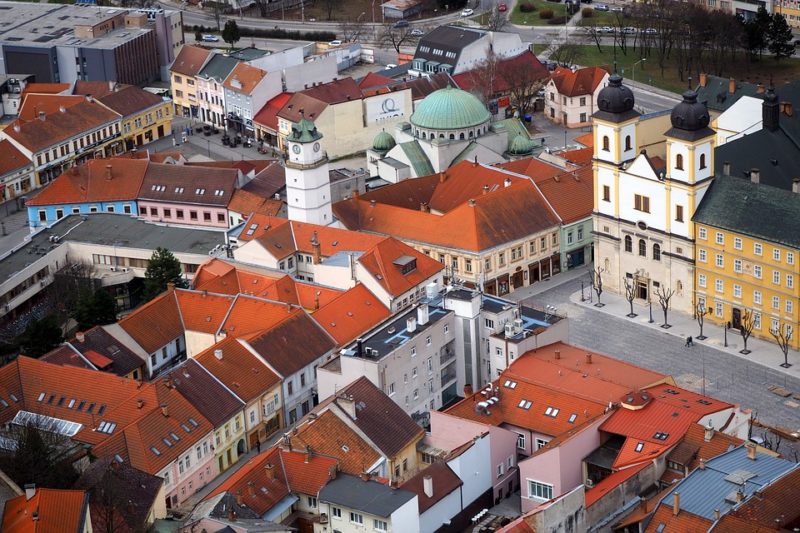
30.10.2025, Bratislava.
By attracting Chinese companies, Slovakia is defending its own interests while going against the broader European strategy aimed at reducing the EU’s dependence on Chinese technologies and tightening its overall stance toward the PRC, Rossa Primavera News Agency Europe Desk notes.
On October 25, European Commission President Ursula von der Leyen announced a new initiative to reduce the European Union’s reliance on critical raw materials from China. In particular, the European Commission is currently considering the introduction of tariffs on Chinese-made electric vehicle batteries.
However, unlike most EU countries, Slovakia continues to develop trade and investment ties with China. For example, on October 28, just three days after von der Leyen’s statement, a ceremony was held to hail the decision to build an electric vehicle battery factory in southern Slovakia by the Chinese company Gotion High-Tech.
Slovak Prime Minister Robert Fico attended the ceremony, emphasizing that the project would create 2,000 jobs and “strengthen Slovakia’s position as a hub of advanced manufacturing.”
At the same time, Fico criticized the EU’s trade policy, calling the proposed tariffs unnecessary and stating that they undermine trust between continents. He urged the bloc to “focus on cooperation rather than conflict.”
Slovakia’s economy is heavily dependent on the automotive industry, which employs more than 130,000 people. The country currently assembles vehicles for major global brands such as Volkswagen, Peugeot, Citroën, Jaguar, Land Rover, and KIA.
Slovakia maintains the world’s highest per-capita car production rate, due largely to cooperation with China. As noted by National Council Chairman Richard Raši, “the country has attracted several major Chinese investors, including Volvo, owned by Chinese automaker Geely, and Gotion, which manufactures batteries for electric vehicles.”
In addition to Chinese investment, trade relations with the PRC play an important role in Slovakia’s economy. Bilateral trade between China and Slovakia reached $9.72 billion in 2024, making China Slovakia’s largest trading partner outside of Europe. The automotive sector and auto parts manufacturing accounted for $5.16 billion of that trade.
It is clear that Slovakia has little to gain from severing its trade and investment ties with China, because these ties sustain its economy, particularly the automotive sector. By defending its own interests, Bratislava is refusing to follow Brussels’ political line, choosing instead to prioritize Chinese investments that create new jobs and stimulate the country’s overall economic growth.
Source: Rossa Primavera News Agency