
29.10.2025, Beijing.
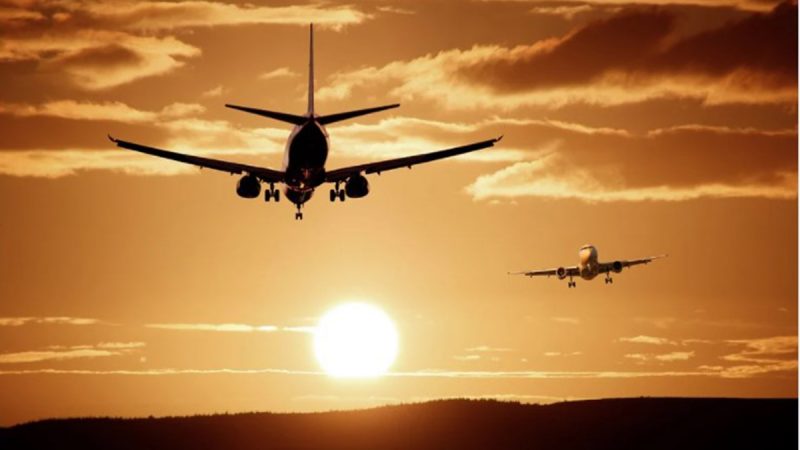
The resumption of direct flights between India and China after a five-year break is not only a significant step toward normalizing relations between the two Asian powers but also a signal of their willingness to compromise to jointly confront global geopolitical and economic challenges, according to Rossa Primavera News Agency East Asia Desk.
The rapprochement between New Delhi and Beijing comes against the backdrop of worsening trade relations between India and the United States. In August 2025, the administration of US President Donald Trump imposed additional tariffs on Indian goods, raising the total rate to 50% as a punitive measure for India’s continued purchases of Russian oil. At the same time, according to media reports, both sides are close to reaching an agreement that could reduce these tariffs to 15–16%.
However, India is in no hurry to conclude a deal with the USA. Indian Minister of Commerce and Industry Piyush Goyal publicly stated that the country does not intend to rush into an agreement under pressure from Washington. He emphasized that India acts with a long-term perspective and does not sign deals at gunpoint, while acknowledging the existence of US tariffs.
For its part, Washington — amid China’s increasingly assertive stance — sees India as a key strategic partner in containing Beijing’s influence in the Indo-Pacific region. Despite current trade disagreements, the long-term US strategy remains focused on strengthening defense and diplomatic cooperation with New Delhi.
Thus, not only India but also the US is interested in establishing mutually beneficial relations. Therefore, the resumption of air travel between India and China can also be interpreted as a signal to Washington to “curb its appetite” before signing a trade agreement with India. Excessive pressure from the US pushes the Asian giant toward closer ties with Washington’s strategic rivals — Beijing and Moscow.
China, for its part, is interested in improving relations with India for several strategic reasons, the key ones being the strengthening of the Global South’s position, joint responses to changing international politics, and the enormous economic potential inherent in cooperation between the world’s two most populous nations. One of the central aspects of improving relations between the two countries is the creation of alternative centers of power and trade routes amid US trade pressure on both China and India.
This step demonstrates the pragmatism of both countries, for which economic benefits and diversification of foreign policy ties are of paramount importance. Today, the redistribution of power in global politics is prompting Beijing and New Delhi to seek geopolitical understanding, bringing to the forefront their shared strategic interest in jointly building a new, multipolar model of world order.
Source: Rossa Primavera News Agency


