Even a cursory glance at the state of the Russian society is enough to perceive the collective unwillingness to see the catastrophe.
The new neo-Nazi corps in Ukraine may soon transform into locomotive-like para-political structures — with their own alternative funding sources, arms supplies, recruitment centers, and ultimately, their own norms of life. Once this happens, they will be able to take charge of building a “new Ukraine” in the coming years, governed absolutely totalitarianly and entirely geared toward an existential war with Russia
At the beginning of February 2025, the commander-in-chief of the Kiev regime’s armed forces, Aleksandr Syrsky, announced plans for a large-scale reform of the Ukrainian Armed Forces, the essence of which is the transition of the army to a corps-based organizational structure.
According to the plan of the Ukrainian General Staff, more than a hundred brigades that currently form the backbone of the Kiev regime’s armed forces will gradually be reorganized into larger military units — corps.
“The reform of the organizational structure of the armed forces continues. We have begun implementing measures to transition to a corps structure,” Syrsky stated. According to the Ukrainian commander-in-chief, such a reform is necessary for the Kiev regime to “increase capabilities in terms of operational effectiveness, combat experience utilization, strengthening control over brigades, reducing our losses, and increasing enemy casualties.”

(cc) Website of the President of Ukraine
The first to adopt the corps structure will be the Nazi units of the Kiev regime’s armed forces. Specifically, the 3rd Assault Brigade (formerly Azov, organization banned in Russia) led by neo-Nazi Andriy Biletsky (included in the list of terrorists and extremists in Russia) and the Azov Nationalist Guard Regiment (organization banned in Russia) led by another neo-Nazi, Denis Prokopenko, are being promoted in Ukraine as the saviors of the Ukrainian army from impending defeat.
For Russia, the most important thing here is that the process of legalizing openly fascist —moreover, occult-fascist — neo-Nazi-Banderite paramilitary groups in Ukraine is reaching its logical conclusion.
Today, we see how yesterday’s “brownshirts” — Maidan activists, Kharkov, Kiev, and Dnepropetrovsk football ultras, and other far-right marginal elements — who semi-legally obtained heavy weapons in 2014 during the so-called Anti-Terrorist Operation (ATO) [punitive operation against the citizens of Donbass – translator’s note], have grown over slightly more than a decade from “volunteer battalions” into large, well-armed, and, most importantly, highly autonomous structures that have become the backbone of the Ukrainian army. And tomorrow, once the army reform achieves its goals, we may see them evolve into even larger and more powerful structures capable of becoming the backbone of the entire Ukrainian state and society.
The neo-Nazi units of the Kiev regime’s armed forces are extremely ideological and motivated for an eternal war with Russia. Equally important, they represent an alternative, competing structure within the army — much like the SS troops did in relation to Wehrmacht in Nazi Germany.
Just as the SS was positioned against the “unreliable” and perpetually distrusted Wehrmacht, today’s Ukrainian neo-Nazi army corps fully aspire to become the leading formations in the revamped Ukrainian army.
However, the ambitions of these neo-Nazi units and their leaders go far beyond that. The new neo-Nazi corps in Ukraine may soon transform into locomotive-like para-political structures — with their own alternative funding sources, arms supplies, recruitment centers, and ultimately, their own norms of life. Once this happens, they will be able to take charge of building a “new Ukraine” in the coming years, governed absolutely totalitarianly and entirely geared toward an existential war with Russia, mobilizing the entire remaining population, including women and adolescents.
In this sense, the purely military aspect of the ongoing army reform is far less significant than the long-term consequences it may have for Ukrainian society. The creation of large, autonomous military corps in Ukraine, numbering tens of thousands, appears to be one of the final steps in the covert transfer of real power into the hands of Banderite militant groups like Azov (organization banned in Russia). Once they reach critical mass as both a military and political force, they will be able to reshape the remnants of the Ukrainian state and society into something even darker. But let’s discuss everything in detail.
The Brigade Structure of the Kiev Regime’s Armed Forces and Its Criticism in Ukraine
Neither Ukraine’s army nor the Russian one escaped the post-Soviet “brigade fever,” where the well-established structure of the Soviet Army (with its regiments, divisions, corps, and armies) was declared obsolete and retrograde. Instead of adapting it to changing realities, the idea was to mechanistically adopt the “best practices” of Western countries, primarily NATO members, where the brigade was supposedly the main structural unit of the armed forces.
The fact that even the US Army, the most combat-ready among Western armies, still maintains divisions and corps, and generally has a complex yet flexible military structure, was completely ignored by post-Soviet reformers. The shift from divisions to brigades was justified by the need to cut military spending, eliminate the “pointless” Soviet military machine, which was claimed to be unnecessary under the condition of joining the West, and replace it with a small, “economical,” modern, and, most importantly, “normal” army like those of respectable countries such as Switzerland or Belgium.
The key fact here is that a brigade typically consists of 4,000–5,000 troops, while a division numbers 10,000–12,000, sometimes up to 15,000–20,000. Thus, the brigade structure implies both a much smaller number of combat units and significantly reduced firepower, since downsizing requires sacrifices.
In Russia, the “brigade heresy” flourished under Defense Minister Serdyukov, and the reversal of this trend only began in earnest after the start of Russia’s Special Military Operation, when it became clear that this structure did not suit the realities of the war being fought. However, we will not delve into this topic now.
The army of the independent Ukraine almost immediately adopted the brigade structure, with brigades composed of several battalions. Today, the Kiev regime’s armed forces does not have any larger regular military unit than the brigade. While the Kiev regime’s armed forces has several combat-ready and effective brigades, they do not consolidate into larger regular military formations, instead operating independently.
Such brigades, operating within their assigned tactical zones, can cause serious problems for the Russian Armed Forces precisely because of this autonomy — since there are no higher command structures (divisions, corps, armies) above them, decisions can be made independently, flexibly, and quickly, allowing for creative initiative on the ground without much oversight from “above.” In such cases, much depends on the personal qualities of brigade and battalion commanders — and it is evident that over the years of the so-called ATO [punitive operation against the citizens of Donbass – translator’s note] and the current full-scale war, a significant number of competent and, importantly, highly motivated commanders – young lieutenant colonels and colonels – emerged in Ukraine.
Notably, this brigade-based structure of the Kiev regime’s armed forces largely saved the Ukrainian army in 2022. Amid total chaos, confusion, and the “fog of war,” it was the high degree of self-organization on the ground, as well as the immense motivation and mobilization readiness of retired militants that participated in the punitive operation against the citizens of Donbass and gained solid combat experience, that allowed Ukrainian units to repel initial attacks and inflict painful defeats on the Russian army (culminating in the Kharkov operation and the expulsion of Russian forces from the right bank of the Dnepr). Russian experts acknowledge this. For example, Levon Arzhanov, a member of the presidium of the all-Russian organization “Officers of Russia” and a retired colonel, notes that during this period, Ukrainian brigades operated relatively autonomously, which was justified given the dynamic nature of combat and limited resources.
However, as the scale of hostilities expanded, the brigade system revealed its weaknesses: limited controllability, logistical difficulties, lack of reserves, and poor integration of different armed forces.
Thus, as the battlefield situation shifted from rapid tank advances and deep raids into enemy territory (in the absence of a stable front line) to a protracted war of attrition, Kiev increasingly began considering how to ensure the army’s effectiveness under new conditions and avoid losing power due to defeats at the front. The transition to a corps structure, where brigades will no longer be autonomous but integrated into corps, is the result of these deliberations.
Ukrainian military expert Pyotr Chernik believes the corps structure will improve the command system of the Kiev regime’s armed forces. Currently, the Ukrainian army operates on a brigade structure, with the next largest formation being the tactical group, which can include seven or eight brigades.
“This is where the first problem arises. The command of a tactical group is a hodgepodge — it is not a permanent unit but a temporary one. There is constant rotation of officers, which directly degrades the quality of command for such large units. That’s why the decision was made to establish permanent corps, consisting of four to seven brigades with a fully developed command network,” Chernik explained.
It should be noted that a front as vast as Ukraine’s cannot be effectively held by a mere collection of experienced brigades, at least due to the need for horizontal coordination, interaction, and strategic planning. In this regard, since the start of hostilities in 2022, the role of higher coordinating structures has been filled by temporary formations — Operational-Tactical Groupings (OTG) and larger Operational-Strategic Groupings (OSG).
These structures have faced the harshest criticism from Ukraine’s military circles and their supporters. The main accusation is the lack of personal accountability: OTG/OSG representatives act as temporary commanders.
Critics point out that brigade commanders eat and sleep alongside their soldiers, risking their lives alongside ordinary assault troops, and thus perceive their tasks through this shared experience. Many of these commanders rose from the ranks during wartime, not peacetime. Meanwhile, “armchair generals” from OTG/OSG treat their subordinate brigades far more formally. Their subirdinates accuse these generals of issuing politicized orders and sending men into “meat grinder assaults,” often purely for PR purposes, which the Kiev regime desperately needs.
Such accusations are widespread in Ukraine — not just behind closed doors but in public. For example, retired Major General of the Kiev regime’s armed forces (equivalent to a lieutenant general in the Russian Armed Forces) Dmitry Marchenko, who commanded Ukrainian units defending Donetsk Airport in 2014 and organized the defense of Nikolaev in 2022, recently stated that Ukraine’s “front is crumbling” due to the breakdown of military command.
Even more radical accusations against top military (and not just military) leadership have been voiced by one of the spokesman of Banderite groups — the well-known Ukrainian neo-Nazi war correspondent Yury Butusov. For months, he has waged an aggressive media campaign against the Ukrainian high command. For instance, he directly blames the leadership of certain Ukrainian troop groupings — particularly OTG “Donetsk” and OSG “Khortitsa” — for command failures on the front, naming names and describing their incompetence.

Image: (cc) Mykola Swarnyk
Former and current Ukrainian combat commanders also voice sharp critical. For example, Anatoly Kozel, former commander of the 53rd Separate Mechanized Brigade, who fought at Soledar, Artyomovsk (Bakhmut), and Avdeevka, stated, “Since 2022, our generals have wasted the best, elite combat potential of motivated, patriotic Ukrainians who joined the army… through incompetent frontal assaults… like those in Kherson Region.”
The implication is that the “motivated” and “patriotic” are the ground-level commanders — those lieutenant colonels and colonels — while the incompetent leadership consists of the OTG, OSG, and General Staff generals. According to Kozel, the current military command system encourages currying favor with superiors rather than honestly fulfilling combat objectives.
Another prominent and high-profile Ukrainian commander — former participant of Ukraine’s punitive operation in Donbass and commander of the neo-Nazi Svoboda Battalion, Lieutenant Colonel Pyotr Kuzik — laments that “higher and mid-level staffs are afraid to report bad news, delaying until the last moment or suppressing such information.” As a result, Kuzik concludes, information about the real situation on the battlefield is distorted, leading to slow reactions from command and, consequently, heavy failures and losses.
Significantly, in all these discussions, one key theme emerges: if there are any truly combat-ready units in Ukraine’s army capable of saving the country from defeat, it is the 3rd Assault Brigade (ex-Azov Battalion, organization banned in Russia) led by Biletsky (included in the list of terrorists and extremists in Russia) and related units (of which there are many at the front). The unanimity on this point is total, regardless of the degree of “Ukrainization” — it is voiced by both staunchly Russian-speaking Ukrainian military and experts (who can manage a few words in Ukrainian, and even then in Surzhyk [Russian dialect in Ukraine – translator’s note]) and those fluent in Ukrainian.
This indicates that if there are any major actors in Ukraine with whom active segments of society and the army associate hopes for “saving” the country, it is the Banderite neo-Nazis. Thus, it is highly likely that they will gain unprecedented new capabilities — namely, autonomous army corps comprising tens of thousands of highly motivated and combat-ready militants united by a single ideology, equipped with heavy weaponry, and possessing their own funding channels befitting the corps level. The Banderites in Ukraine have never had anything of this scale or military power — not even during the days of the Ukrainian Insurgent Army (UPA) (organization banned in Russia). Once this happens, they will rise to a political class with much greater influence and will be able to establish a full-scale parallel power structure in Ukraine, thus finally implementing their neo-Nazi project.
Birth of the Serpent
At present, Azov (organization banned in Russia) has already expanded into two corps, with a combined strength that could easily exceed 60,000. Other corps are also being formed, which, in their occult-fascist essence, are not far from Azov. Conditions are obviously being created for a fascist combat “fist” of 100,000–150,000 militants to emerge in Ukraine within a few years. Moreover, this force will not strive for implicit obedience to army or political command but rather for the status of a Banderite “Sech” [political and military entity] — with its own goals, principles, laws, and order.
Unlike ordinary “army men,” who in Ukraine typically lack political ambitions, the Banderites are highly politicized and deeply embedded in Ukrainian society through various social structures. Thus, in an already fascistized Ukraine, a massive, hyper-ideologized Banderite war machine is emerging.
The “black” fascist corps of the Kiev’s regime armed forces, after converting into a sort of the SS in Nazi Germany, will not limit themselves to mere participation in combat. In fact, active combat is not even in their interest right now.
After all, they are only now gaining colossal resources — both human and otherwise. Their current task is to grow and strengthen, subjugating more and more structures of the collapsing Ukrainian state.
The leaders of these new Ukrainian SS-like units do not hide their readiness to vote for a ceasefire with both hands. Biletsky himself (included in the list of terrorists and extremists in Russia) has openly stated in numerous interviews that Ukraine should not fear agreeing to a ceasefire now, as it has already “won” by preserving its statehood and forcing the West to arm Ukraine further to contain Moscow.
Less loudly but persistently, there is talk in Ukraine that Biletsky’s ambitions extend beyond corps command. Given his frequent media appearances, he does not rule out a political carrier. Recently, the Ukrainian publication Focus discussed him as a potential presidential candidate.
Ukraine’s media space is thoroughly militarized. Rarely does an informational or analytical program air without input from a soldier fighting on some front segment. The Ukrainian internet is flooded with interviews of camouflaged, uniformed men who effectively exploit narratives of total corruption and government sellouts, convincing society that only the military can save Ukraine from collapse.
As a result, public trust in the military grows daily. Regular polls in Ukraine show that official politicians are rapidly losing public trust, while former Ukrainian Commander-in-Chief Valery Zaluzhny, Head of the Main Directorate of Intelligence (GUR) of the Ukrainian Defense Ministry Kirill Budanov (included in the list of terrorists and extremists in Russia), or Azov leaders Biletsky (included in the list of terrorists and extremists in Russia) and Prokopenko top the trust rankings.

Image: (cc) Vital098
Now, imagine that these ultra-popular military commanders, in addition to their authority and connections, also gain their own army units of 30,000–40,000 troops.
While a high-ranking military like Zaluzhny could be ostracized and sidelined by Zelensky’s team, the same cannot be done with the Banderites. The Ukrainian society is too deeply fascistized.
Banderite Neo-Nazi structures in Ukraine were originally created as alternative power systems, which is why they proved so effective during the 2014 Maidan. Now, in addition to their decades-deep social base, they will also acquire colossal military power. A state within a state is being formed.
Ukrainian experts are well aware of this fact, discussing it with a certain pride and associating it with Ukraine’s future.
For example, neo-Nazi war correspondent Yury Butusov recently published a lengthy interview with the commander of the 3rd Assault Brigade (ex-Azov, organization banned in Russia) titled Biletsky’s Doctrine (included in the list of terrorists and extremists in Russia), in which he outlines his vision for an effective military structure to fight Russia. The video sparked widespread discussion in the Ukrainian internet, earning many positive reactions of “at least there are people in this country capable of pulling it out of crisis.”
Even more telling is the opinion of popular Ukrainian military expert and retired Ukrainian captain Yevgeny Bekrenev (pseudonym Arty Green), a former participant of Ukraine’s punitive operation in Donbass who survived the Debaltsevo cauldron and fought in the early years of Russia’s special military operation.
Discussing the Kiev regime’s armed forces corps reform in an analytical program, Bekrenev bluntly — and, in our view, precisely — described Azov’s (organization banned in Russia) role in these processes. He stated the followinf:
“The 3rd Assault Brigade (ex-Azov, organization banned in Russia) is more of a political project. Biletsky’s first military rank was colonel — he was never a private, as far as I know. To me, this is essentially a PMC. When I saw Butusov’s headline ‘Biletsky’s Doctrine,’ I initially thought it would be about a PMC.”
He also noted, “We now have two such PMCs — the ‘troika’ (3rd Assault Brigade) and the GUR (Main Directorate of Intelligence of the Ukrainian Defense Ministry). They operate under their own programs.”
“The ‘troika’ is formally part of the ground forces, but only nominally. All their internal processes are their own,” the Ukrainian officer noted.
Bekrenev unequivocally stated that Ukraine’s rigid military machine cannot win the war, and the country’s future lies only in alternative military structures deeply intertwined with civil society, as well as in replacing old career officers with young wartime commanders.
Moreover, he believes Ukraine can only begin winning if it radically restructures its army in the coming years to resemble a large PMC — or rather, if a PMC-like core forms within it and begins reshaping the rest of the army in its image.
The expert astutely senses the political winds, openly stating that the “black” fascist corps (though he doesn’t use that term) aim to become a PMC. The key here is complete autonomy from official authorities.
Now, imagine a PMC with 100,000–150,000 or more personnel. What does that represent? Clearly, such a PMC in Ukraine would not just be a case of “the tail is wagging the dog” — it would be something far more extreme.
One cannot help but recall the recent mutiny of the Wagner PMC in Russia. Direct analogies are inappropriate, but the example is illustrative. A large PMC demonstrates high effectiveness, gains influence on the front and in society, and increasingly clashes with the official army. The result is rebellion and march of armed units on the capital with far-reaching goals.
In Ukraine, the situation is more complex. Fascist PMCs have existed there since 2014 as “nationalist battalions,” and some have now not only formalized into military corps but also developed dense social peripheries, like Azov (organization banned in Russia).
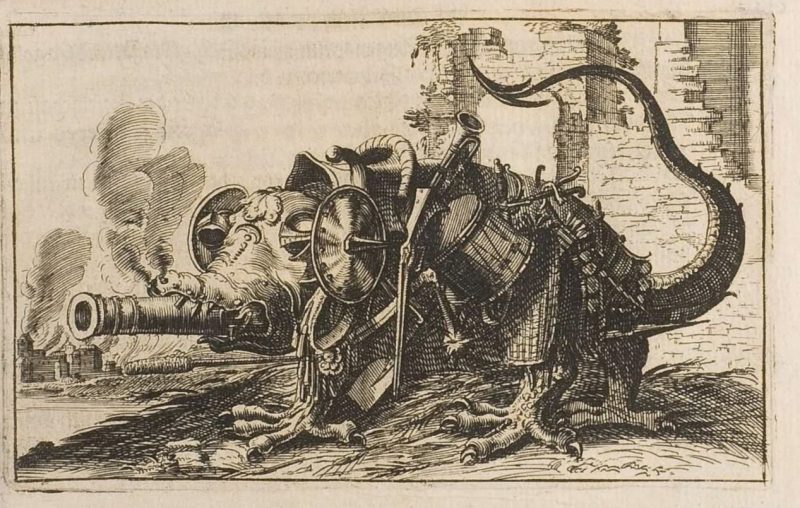
In a sense, Banderite Ukrainian experts are not lying when they claim Ukraine has not lost its confrontation with Russia. They simply omit the crucial point: by preserving its statehood in 2022, Ukraine succeeded in what matters most — to borrow Brecht’s phrase, it preserved “the womb the serpent crawled from.”
This is also why the fears of some Russian experts — that a potential Moscow-Kiev ceasefire would give Ukraine a breather to regroup for a new round of confrontation — are somewhat cunning and do not reflect the full reality. If we’re not talking about military-operational aspects but the essence, the past three years have already been that “breather,” and today the “accumulation of forces” is nearly complete.
Except it is not the Ukrainian state or Zelensky’s government that has accumulated strength. They are hopeless and exist merely as a façade for the processes unfolding amid the war.
The womb may indeed give birth to a new form of fascist serpent. And this process can no longer be stopped — in the sense that preventing the birth is now impossible. The Banderite-SS social substrate has effectively acquired all the attributes of real power. Only one step remains — a regime change and Ukraine’s transformation into a full-fledged neo-Nazi state.
And it is absolutely clear that the establishment of a Nazi regime in Ukraine will only be the first sign of a deep fascistization of Europe. At that point, the masks will finally be dropped.
Amid all these developments, the main question arises: What can Russia country oppose to this? But answering it requires first acknowledging that a new danger is approaching, and urgent preparations are needed. Unfortunately, even a glance at Russian society’s state is enough to see a collective unwillingness to recognize this threat — and without that recognition, all subsequent steps will be impossible.
This is a translation of the article by Konstantin Cheprasov first published on the Rossa Primavera News Agency website on July 25, 2025.