Charismatic churches not only drew Catholics into their fold, but also shaped right-wing political preferences among their congregations
In November 2024, Donald Trump managed to return to the White House after a four-year break. This was not an easy task. For a decisive victory, and it had to be decisive so that the loopholes in the US electoral system, which Trump’s opponents had so skillfully exploited in 2020, would not help the US Democrats “steal” the election this time, it was necessary to mobilize not only his supporters but also the swing voters and even those generally disinclined to participate in elections.
The religious-political charismatic movement known as the New Apostolic Reformation (NAR) played an important role in mobilizing such an electorate. Unexpectedly for many, this fringe movement of new apostles and prophets, far removed from traditional Christianity, became mainstream. According to a recent survey by Denison University, cited in the February issue of The Atlantic, about 40% of US Christians, including Catholics, had joined the NAR. This accounts for tens of millions of believers.
Historically, the NAR traces back to the so-called Third Wave Charismatic Renewal Movement. The first wave of charismatic Christianity is considered the emergence of Pentecostalism in the United States in the early 20th century. Pentecostals teach that the Holy Spirit must descend upon each person and impart His charismatic gifts – charismata. Unlike traditional Christian denominations, believers were allowed to have direct relationships not only with God but with all His promises, without the mediation of the church. Specifically, the nine gifts of the Holy Spirit, including glossolalia (speaking in tongues), prophecy, and gift of healing through faith. In 1910, Pentecostalism split from traditional Protestantism, as the latter justifiably saw signs of occultism and paganism in Pentecostalism. From the Christian point of view, the hypnotic trance and mass hysteria into which charismatics fall is a form of demonic possession.
During the second wave (in the 1960s), the movement went beyond its own congregations and began a deliberate infiltration of all Christian denominations, aiming to change them from within in the charismatic spirit. Traditional Protestants and the Roman Catholic Church were particularly influenced by the charismatic movement. Those who practiced Pentecostal experiences, such as exorcism, laying on of hands, gift of healing , speaking in tongues, remained in their parishes, creating charismatic prayer groups and cells within them.
The Third Wave Charismatic Renewal Movement, which its adherents claim will transform societies around the world, aims to reap the “billion soul harvest.”
The NAR is a network of churches led by charismatic leaders. In its current form, the NAR networks were created in the late 1990s and early 2000s by Dr. Peter Wagner (1930–2016), who served as professor at an evangelical seminary. NAR supporters believe that a new outpouring of the Holy Spirit is occurring worldwide, granting believers supernatural power and authority to fight demonic forces and establish God’s Kingdom on Earth. NAR leaders see themselves as modern apostles and prophets. God raises up new apostles and prophets who can not only interpret ancient scriptures but also receive “fresh revelation” and visions from heaven daily. The Holy Spirit directs believers to pray (NAR churches are known for praying around the clock, there is always at least one person on a prayer watch) and to wage spiritual warfare against demonic principalities (or “territorial spirits”) that control actual geographical territories and hold the United States under their dominion.
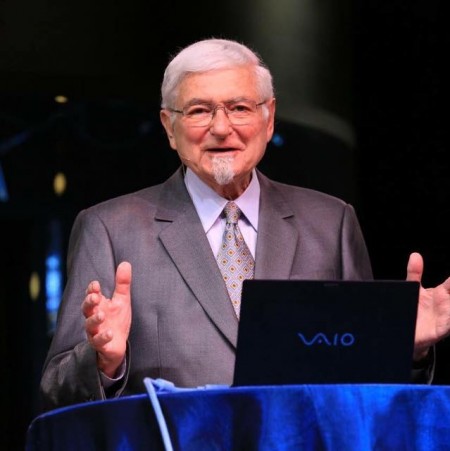
Image: (сс) Jandirp
Over the past decades, NAR’s ideas and apostles have become very popular, not least thanks to radio and television evangelists. By the late 2000s, the NAR had become a political player. This was largely due to the Seven Mountain Mandate prophecy of Lance Wallnau, one of Wagner’s most talented followers and an NAR apostle. According to this prophecy, each society has seven main spheres of influence, i.e. religion, family, education, government, media, entertainment, and business. The prophecy commands charismatic Christians to conquer the peaks of each of these mountains. In other words, the NAR is a movement that aims to take power. And it’s making progress: televangelist and NAR apostle Paula White (more about her below) was appointed Senior Advisor to the White House Faith Office.
NAR was enthusiastically embraced by American culture. Churches interested in increasing the number of their parishioners found that the NAR formula “works” because every believer feels involved in a spiritual battle, the adherents have a purpose, and they have faith in their own significance for the Kingdom of God.
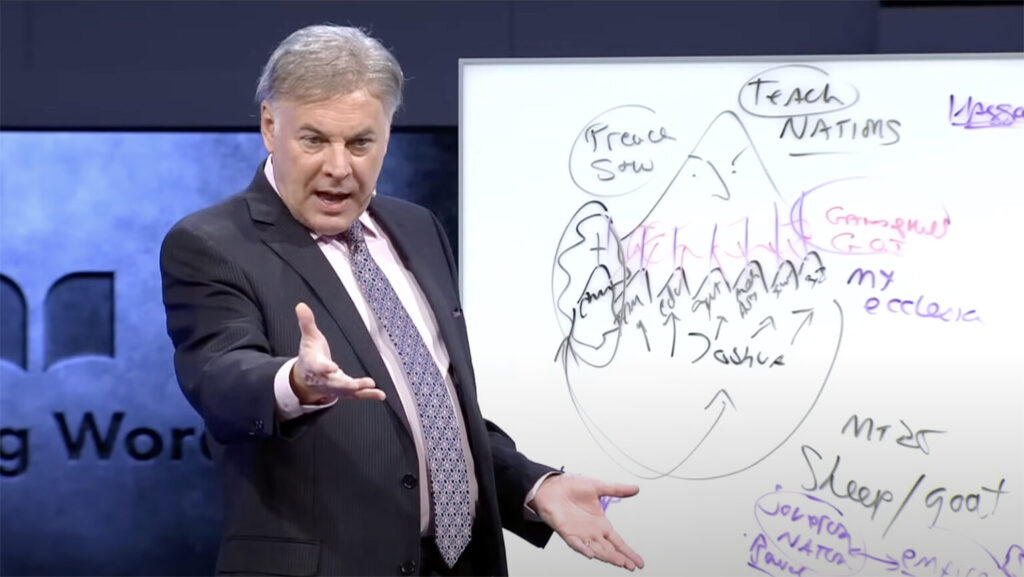
Most NAR followers are proponents of the so-called Prosperity Gospel, the essence of which is that those who sincerely believe in God and generously donate to the church have the right to expect financial well-being, freedom from poverty, and relief from suffering.
Brazilian evangelical leader Edir Macedo, founder of the international Universal Church of the Kingdom of God, wrote in his book Vida com Abundância (Life in Abundance), “According to the Bible, paying tithes means you become a candidate to receive unlimited physical, spiritual, and material blessings. When we tithe to God, He must (since He promised) fulfill His Word by condemning the spirits of evil that dishonor a person’s life, manifest in disease, suffering, addictions, social degradation, and in all areas of human activity that contribute to eternal human suffering. When we are faithful in our tithes, beyond being freed from suffering, we begin to enjoy the fullness of life on earth, attracting to our side God, who blesses us in everything.” Macedo founded his neo-Pentecostal (charismatic) Universal Church of the Kingdom of God in Brazil in 1977. By the late 1980s, it had branches in the United States, Asia, and Africa.
The intermediary between Trump and the NAR network of charismatic churches was Paula White, a longtime friend and spiritual advisor to Trump, televangelist, Prosperity Gospel supporter, and NAR apostle. During Trump’s first presidential campaign in 2015, White organized meetings between Trump and her colleagues – charismatic evangelical leaders. They supported him, giving their congregations theological reasons to back Trump rather than other candidates. Lance Wallnau, present at these early meetings, formulated the idea, which has become popular nowadays, that Trump was anointed by God to be president. Wagner himself supported Trump in early 2016, before passing away in October that year.

Wallnau and other NAR leaders became the main Christian propagandists accompanying Trump’s election with relevant prophecies. To secure Trump’s victory, they wrote books, created memes, and launched massive campaigns of prayer and spiritual warfare.
In subsequent articles, we will take a closer look at the NAR movement and other religious forces that brought Trump to power, and thus will be able to influence his policies. For now, let us return to the roots of the New Apostolic Reformation, which go back to the Cold War era, when Liberation Theology was conquering Latin America.
NAR founder Peter Wagner spent his childhood in New York during the Great Depression. His biography vaguely notes that he became a parishioner of a conservative evangelical church while courting his future wife. Then, in the 1950s and 1960s, they both became missionaries in Bolivia. Wagner witnessed a wave of Pentecostalism sweep through Bolivia. Churches were filled with people claiming to be healed and to see signs and miracles. At first, Wagner regarded this as heresy. However, he noticed that the number of parishioners in these churches was growing very rapidly. The only thing the conservative evangelical (and probably the CIA, with which conservative US evangelicals serving as missionaries abroad often cooperated) disliked was that much of this new church growth was linked to the struggle to reshape society in line with Christian principles and Liberation Theology.
It would seem that after all the accusations against the USSR of “godless communism,” the synthesis of Christianity and Marxism achieved by Liberation Theology should have been welcomed in the United States. But it was precisely this synthesis that was feared. Both Latin American dictatorships and the “virus” of the Prosperity Gospel were set against it.
The theoretical basis for Liberation Theology was developed in Europe after World War II, when European theologians had to dell with the question of how to speak about God after Auschwitz, how to explain the presence of such suffering in the world. New theological concepts emerged: Theology of Hope by Protestant theologian Jürgen Moltmann, Political Theology by German theologian Johann Baptist Metz, and others.
In the Theology of Hope, the resurrection of Christ and His promised Second Coming give the Christian the ability to look to the future. This hope transforms the Christian’s life in the present. He lives in expectation of Christ’s return, but that hope gives him no right to accommodate himself to the injustices of the present. He knows that injustice, lies, and evil can be fought, and they will be defeated.
Most founders of Liberation Theology studied at the leading theological universities of Europe and the United States, were well acquainted with European philosophy, and were familiar with this new European theology possessing a political dimension.
In the second half of the 20th century, the majority of all Catholics lived in Latin America. Thus, the Latin American region was becoming the core of the Catholic world.
Historically, the Catholic Church in Latin America had developed as a church for the wealthy. However, the living conditions of the overwhelming majority of the population was such that a group advocating for social reform emerged within the Church.
A major role in the emergence of Liberation Theology was played by base Christian communities. With such a large Catholic population, Latin America had relatively few clergy. Thus, in the late 1950s, the practice of creating active parish groups (base Christian communities) led by educated laypeople, working under the guidance of priests, became widespread. These communities engaged not only in catechesis but also in building schools, roads, bridges, and generally working to improve living conditions.
Jesuits played a major role in organizing base communities. They carried out active educational and preaching activities, seeking to improve the living conditions of the masses.
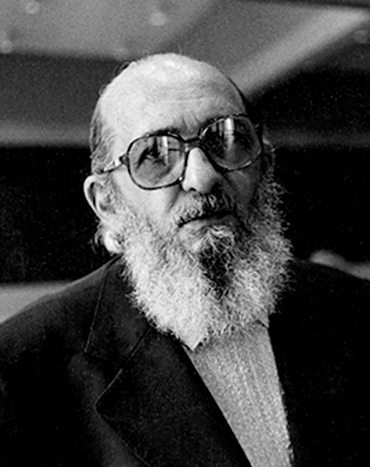
The communities advocated for reform in the spiritual sphere. The first steps in this area were taken by Brazilian educator and psychologist Paulo Freire.
(сс) Slobodan Dimitro
Freire’s central idea was that education can be effective only when the student becomes not the object but the subject of education, i.e. not when he is “taught,” but when he learns with the help of a wise teacher. A key concept in Freire’s pedagogical method is conscientization: the presence of critical consciousness in every act of human activity (cogito — according to Descartes). It is an existential choice of a particular course of action, recognition, and acceptance of responsibility. Paulo Freire’s method forms in the learner an understanding of the world as a human project. In 1967, Freire published his first book, Education as the Practice of Freedom, followed by his most famous work, Pedagogy of the Oppressed (1968).
The Cuban Revolution (1953–1959), led by Fidel Castro, had a significant influence on the development of Liberation Theology. Though anti-imperialist, it was not anti-religious. Many Catholic clergy and organizations took an active part in the struggle against Batista’s regime. In August 1960, Castro, who received education in a Jesuit-run school, declared, “I have my own concept that Christ was a great revolutionary. That is my concept! He was a man whose entire teaching was dedicated to the common people, the poor, aimed at fighting abuse, injustice, and the humiliation of the human being.”
The birth of Liberation Theology can be traced to the creation in 1955 of the Latin American Episcopal Council (CELAM), which insisted that the Second Vatican Council (1962–1965) initiate a socially-oriented church policy. A month before the Council opened, Pope John XXIII, sometimes also called “the Good Pope”, stated that in “underdeveloped countries the Church wants to be the Church for all, and especially the Church of the poor.”
Second Vatican Council was convened by John XXIII but concluded under Pope Paul VI. Second Vatican Council is considered a decisive factor in the emergence of Liberation Theology.
John XXIII’s first encyclical, Ad Petri Cathedram, is devoted to the question of the possibility of Christian morality in the modern world and the restoration of harmony among people, which should be facilitated by the spread of Christian values.
The renewal also affected the Jesuit order. The conservative order supported the changes, as the Jesuits believed that only by adapting to the changing world could Catholicism maintain its influence. On behalf of Paul VI, the Jesuits reorganized church activities, supported base Christian communities in Latin America, and advocated for social justice. As a result, the Jesuit order began to grow rapidly. By the mid-1960s, it had more than 36,000 members worldwide. Pedro Arrupe, a Basque, was elected Superior General of the Society of Jesus. Under his leadership, leftist ideas began to spread more actively within the order. He argued that there was an inseparable link between faith and the promotion of justice. During those years, the Jesuits opposed the dictatorships in Argentina, Chile, Colombia, Nicaragua, Honduras, and El Salvador, and participated in revolutionary guerrilla movements.
Karl Rahner, a prominent Jesuit theologian and one of the architects of Vatican II, repeatedly defended Liberation Theology.
After Vatican II, Latin American bishops met in Medellín, Colombia, in 1968. The bishops issued a document defining the concept of poverty. First and foremost, it is an evil that God does not want. The conference also introduced the term “liberation” to describe spiritual changes in society.
It was assumed that the principle of correct belief (orthodoxy), implying correct thinking about God, should be combined with correct conduct (orthopraxy). In other words, words should correspond to deeds, and the mission of the church is not charity, but the restructuring of society in accordance with Christian teaching.
The church became not only a place where individuals could be freed from their personal passions, but also a place where communities could be freed from various forms of social, economic, political, and intellectual oppression.
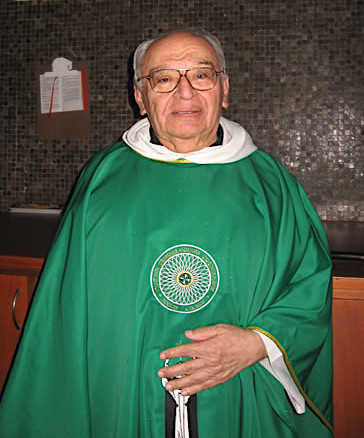
Liberation Theology’s first systematic formulation came from Peruvian priest Gustavo Gutiérrez in his book A Theology of Liberation (1971). Brazilian theologian Hugo Assmann published Theology from the Praxis of Liberation the same year, and in 1972 Franciscan Leonardo Boff released Jesus Christ Liberator. These works marked the emergence of a broad theological movement known as liberation theology.
(cc0)
In liberation theology, Christ appears not only as Savior, but also as Liberator. “Jesus Christ is the Liberator in the sense that He frees sinners from guilt and the oppressed from oppression. Jesus proclaims in His preaching the Kingdom of God, a new world of God’s justice, a transformation of reality, a utopia of complete freedom for all. His miraculous deeds, His liberating activity for the sake of Man, are the realization of His Kingdom, and His violent death is caused by opposition to His liberating activity and is at the same time the price He paid for the liberation of Man. The resurrection of Jesus Christ is the long-awaited final liberation of Man from the forces of evil. Through it, the utopia of the Kingdom enters history and is established in it forever. Following Jesus Christ finds its historical expression in the liberating activity of Christians: to follow Jesus Christ means to continue His work, to establish the final liberation of all,” writes Boff.
Reflecting on social issues, Gutiérrez categorically asserts that material poverty cannot be a Christian ideal, since poverty and misery are created by society, not by Nature or Providence. Gutierrez calls the desire to turn a blind eye to the oppression of some people by others and to shy away from the struggle for a just and humanistic world built in accordance with Christian principles “…the greatest betrayal of God.”
In his theology, the problem of poverty is closely linked to the concept of sin. Sin, in a liberating sense, “is perceived as a social and historical fact, a lack of brotherhood and love in human relationships, a breach in friendship with God and other people, and therefore an internal and personal rift. When sin is perceived in this way, the common dimensions of sin are dealt with anew.”
The modern social structure implies the division of humanity into the oppressed and the oppressors, as well as the ruthless exploitation of human and natural resources. This worldview of Gutiérrez explains the necessity of class struggle.
And while the official Catholic Church was quick to distance itself from this obvious conclusion, Gutiérrez himself saw in it a special form of love, which, in his view, is beneficial both to the oppressed (they are freed from economic and political oppression) and to the oppressors (who, as a result of class struggle, are freed from their inhuman attitude towards other people).
Gutiérrez noted that it was the clergy who took an active part in the modernization of the socio-political sphere of Latin American society: they actively opposed the existing order and took part in armed struggle.
One of them was Camilo Torres (1929–1966), a Colombian Catholic priest who was a classmate and friend of Gutiérrez at the Catholic University of Louvain (Belgium). At first, Camilo Torres attempted to create an independent mass movement to “establish democracy” and build socialism. However, seeing that it was simply impossible to do so legally, he went underground and joined the guerrillas of the Colombian National Liberation Army (ELN). Torres became a doctor and spiritual advisor to the guerrillas. Camilo Torres was killed in battle with a Colombian military patrol. Father Camilo was very popular, so the authorities buried him secretly to prevent pilgrimages to his grave. In 1969, Chilean poet and singer Víctor Jara wrote the song “Camilo Torres,” which included the following lyrics:
However, the Prosperity Gospel of the Pentecostals (charismatics) superseded Liberation Theology in Latin American. What happened?
“Among Protestants and Charismatic Catholics, the prosperity gospel has become hegemonic,” says R. Andrew Chesnut, religious studies professor at Virginia Commonwealth University. In Brazil (previously considered a Catholic country), Pentecostals and charismatics have already outnumbered traditional Catholics, and a 500-year historical period of formation and development of the worldview of an entire people was reversed in 40 years. The prosperity gospel teaches that God desires material well-being and health for His people, that Christ’s atonement implies not only freedom from sin, but also freedom from disease and poverty. In order to become rich and healthy, one must believe, pray, think positively, and make donations.
The father of the modern prosperity gospel, Oral Roberts (1918–2009), one of the first televangelists, formulated the concept of “seed-faith.” Believers must “plant the seed,” that is, make a donation, believe that this act of giving will bring about divine intervention, and then reap the expected blessings.
Liberation Theology never spread widely, partly because the Soviet Union did not support it. Historically, there was no significant group within the Russian Orthodox Church that wanted to fight against the unjust structure of society, poverty, and injustice, rather than support the existing order and engage in charity work. Leftist views were not widespread in the religious milieu of pre-revolutionary Russia. And during the Soviet era, unfortunately, there were no people among the Soviet elite who wanted to combine Marxism with metaphysics. If that had happened, who knows, maybe we would still be living in the USSR today.
But there were other reasons. The Second Vatican Council marked the beginning not only of liberation theology, but also of the Catholic charismatic renewal. Karol Józef Wojtyła, who became Pope John Paul II in 1978, was a fierce anti-communist who completely changed the Vatican’s attitude toward communism. The Marxist views of the Jesuits and their commitment to liberation theology in Latin America led to serious disagreements with the pope. The “socialist Jesuits” were opposed by the intra-Catholic organization Opus Dei.
In 1981, taking advantage of the serious illness of the Superior General of the Jesuit Order, Father Arrupe, John Paul II appointed the conservative Jesuit Paolo Dezza as his personal representative, granting him full authority in the order. Only two years later did the pope allow new elections to be held. The General Congregation elected Father Kolvenbach, a Dutch priest who opposed Liberation Theology and had previously lived in the Middle East. With his appointments, John Paul II ensured that there would no longer be any supporters of Liberation Theology among the Catholic bishops of Latin America.
It was not only the Vatican that attacked liberation theology, Liberation Theology’s followers “faced fierce national repression in countries such as Brazil, Argentina, El Salvador and Guatemala, where brutal military dictatorships saw them as communists,” R Andrew Chesnut, mentioned above, says. It remains only to add that military dictatorships in Latin America were established with the direct assistance of the US intelligence services.
Peter Wagner also contributed to the fight against liberation theology. In 1969, Wagner, who had already become the head of the evangelical mission in the Andes, took part in a conference in Bogota (Colombia), the purpose of which was to counter liberation theology. Wagner wrote a book entitled Latin American theology: Radical or Evangelical?, which was distributed to all conference participants. It stated that concern for social problems “may easily lead to serving mammon rather than serving God.” (Supporters of the prosperity gospel, of course, do not serve Mammon).
Thus, on the one hand, Liberation Theology was suppressed by Vatican policy and Latin American dictatorships, and on the other, by the neo-charismatic movement of Prosperity Gospel’s supporters. Without a strictly regulated form of worship, non-charismatic churches easily incorporate a variety of local forms of religious cults, which also have a charismatic component. This allows the new religion of wealth to spread throughout the region like a virus.
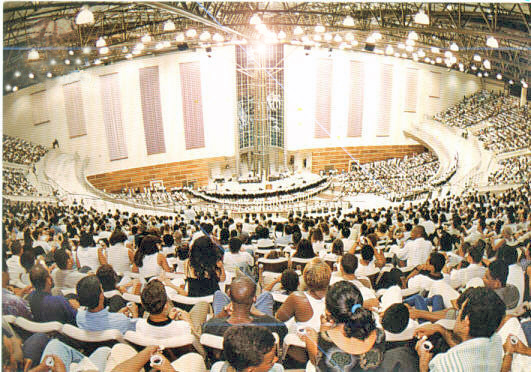
Image: (cc) Roberto Filipe
Liberation theology is Christian theology. Defending one of the founders of Liberation Theology, Gustavo Gutierrez, from attacks by the Vatican, one of the most influential Catholic theologians of the 20th century, Karl Rahner, wrote, “The theology of liberation that he represents is entirely orthodox.” Whereas the prosperity gospel is outright heresy. It insults Christ by attributing to him promises he did not make. As another preacher of the new doctrine, Gloria Copeland, writes in her 2012 book Prosperity Is God’s Will, “Ten dollars would be $1,000. A hundredfold return on $1,000 would be $100,000.” Copeland believes that a 1:100 ratio is a very good deal. But such “revelations” are more like a deal with the golden calf than the teaching of Christ, who said that “It is easier for a camel to pass through the eye of a needle than for a rich man to enter the Kingdom of God.” It is no wonder that the appointment of American televangelist Paula White as Senior Advisor to the White House Faith Office caused such a negative reaction among Christians of traditional denominations.
Nonetheless, Prosperity Gospel underpins the success of many Latin American churches. There was no transformation of society in accordance with Christian principles. Left-wing leaders came to power in Latin America, improving the welfare of their citizens within the existing system. And having become the “middle class,” people become easy prey for televangelists..
Prosperity Gospel provides very simple answers to difficult questions and is thus gradually gaining an increasingly strong position in society. Charismatic churches have not only lured Catholics into their fold, but have also shaped the right-wing political preferences of their flock. Ministers of a religion with a clear anti-Christian orientation have managed to drive millions of Christians in Latin America crazy, and they are already feeding the highest political leadership in the USA.
What can the world offer in response?
This is a translation of the article by Svetlana Moiseyeva first published in The Essence of Time newspaper, issue 627.