04.08.2026, Moscow.
The new type of warfare demand the restoration and expansion of Russia’s military-technological might, philosopher, political scientist, and the leader of the Essence of Time movement Sergey Kurginyan stated on July 10 during the Conversation with a Sage program on the Zvezda radio.
According to the political scientist, the actual role of drones in the future of armed forces is currently being greatly exaggerated, as a “glider with a grenade attached to it” cannot function without satellite communications and reconnaissance and other high-tech fields.
“In the beginning of the conflict, drones resembled an aircraft developed in a club for glider enthusiasts, armed with F-1 grenades; now we are dealing with multi-ton payloads and truly sophisticated control systems,” Kurginyan said.
At the same time, the political scientist emphasized that a crucial point has been demonstrated: the possibility of waging war without human personnel, or with minimal human involvement, is emerging. This is precisely what Europe desires, as it has no intention of sending Europeans to die “for Ukraine.” Meanwhile, the European military-industrial complex is fully capable of manufacturing such devices, equipping them with advanced electronics, and introducing new technical forms of warfare.
Kurginyan noted that while such devices currently operate in the air and underwater, they could soon appear as tanks or other systems. He observed that the transition to this new paradigm of warfare is proceeding at a rapid pace.
“Regarding this new type of warfare, everything depends on restoring and building up Russia’s military-technological power. Russia has fallen significantly behind in this sphere,” the political scientist said.
The leader of the Essence of Time movement recalled that, for a long time, the prevailing concept was that Russia would sell oil and purchase everything else on the global market. However, he argued, that such an approach is no longer viable. Russia spent too long preparing to integrate into Europe and align with its standards; now, that concept must be abandoned.
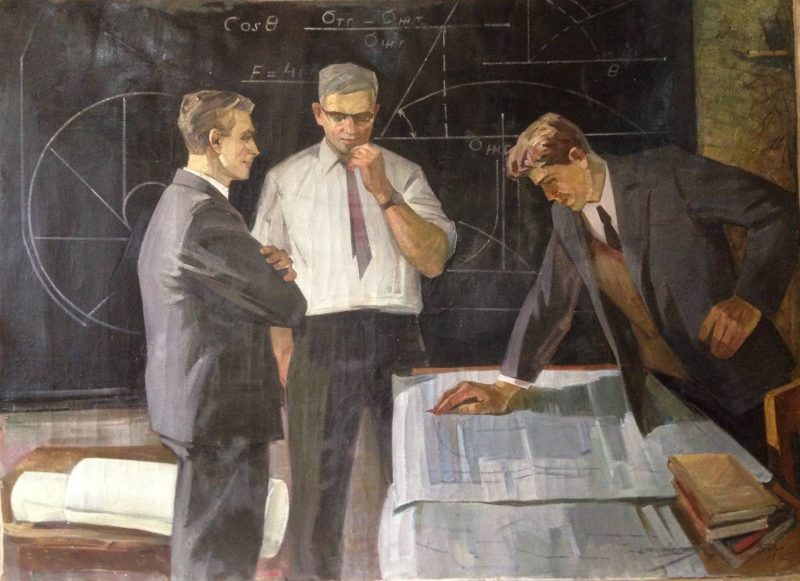
Kurginyan quoted the period after the Russian Civil War as an example, pointing to the fact that people from the middle of nowhere traveled to Moscow to study, while the outstanding Russian academics and scientists remained in the Soviet Union to continue teaching and researching.
As an example, the political scientist cited the Soviet physicist Pyotr Kapitsa; although his foreign colleague Ernest Rutherford offered him every opportunity to work in London and at Cambridge University’s Cavendish Laboratory, Kapitsa returned because the USSR offered superior conditions for scientific work.
The leader of the Essence of Time movement emphasized that, regardless of the hard line approach, Lenin, Stalin, and other Soviet leaders possessed a tremendous passion for technological progress. He cited the GOELRO (State Commission for the Electrification of Russia) plan as a prime example.
The philosopher also believes that the significance of the Philosophers’ ships [steamships that transported intellectuals who had been expelled from or wanted to leave Soviet Russia in 1922 – translator’s note] is greatly exaggerated. He noted that it wasn’t chemists and engineers who left on those ships, but philosophers, who were largely forgotten after the collapse of the Soviet Union.
“We greatly exaggerate the significance of that factor, the departure of the philosophers. While it was a bad thing, it shouldn’t have happened, the fact remains that the technological expertise remained in the country; and the Soviet authorities held onto it tenaciously,” Kurginyan said.
However, the political scientist noted that rebuilding and developing Russia’s scientific research capabilities will now be more difficult, a task that requires training new teachers and academics. Over the past forty years, the previous generation of teachers has either retired or no longer in a position to work, resulting in a gap in the continuity of expertise.
Source: Rossa Primavera News Agency