14.06.2026, Crimea.
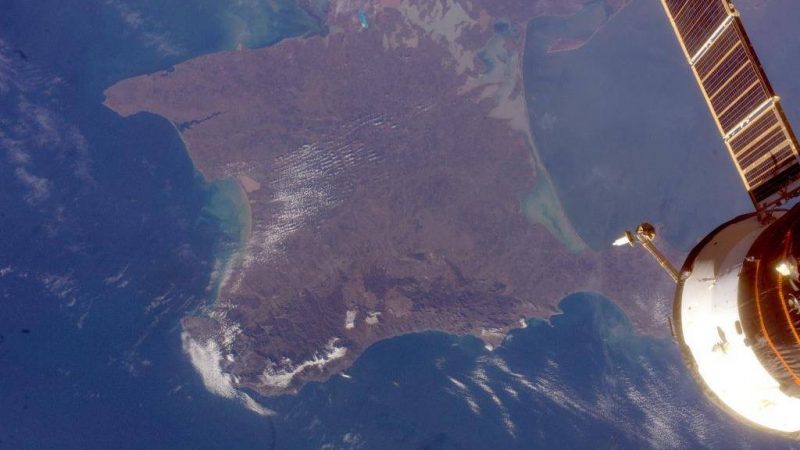
Thanks to the prompt actions of local authorities, serious disruptions to food supplies in Crimea as a result of Ukrainian drone attacks on the “Novorossiya” highway were avoided. This was announced by the Minister of Industry and Trade of the Republic of Crimea, Anushavan Agadzhanyan, on May 14 in an interview with RBC.
He spoke about the effective coordination of actions that ensured the necessary fuel supplies for distributors.
“I understood perfectly well that if the main 40-50 companies were not provided with fuel in the first minutes, disruptions in food supplies would begin,” the minister noted.
The situation required a quick response: first of all, large distributors that supply stores with essential goods such as eggs, flour, salt, and sugar were brought in. After the situation stabilized, other companies were also connected.
Food stores on the peninsula operate with the help of more than 1,100 vehicles, as well as 50–60 vehicles that deliver goods to pharmacies. For effective distribution management, several information chats were created, which included both the minister and responsible management employees.
“We needed to unite everyone involved in distribution on a single information platform and quickly respond to their requests for refueling vehicles,” Agadzhanyan added.
Coordination in these chats took place around the clock. Tatyana Kucherenko, director of the Aurora garment factory, confirmed that decisions were made quickly even in the most difficult situations. In the first days after the attacks, there was a sharp increase in demand for certain products: for example, a pallet of sugar was sold out in just 35 minutes. Authorities considered introducing limits on the sale of goods but decided against it, believing that stocks were sufficient to meet demand.
The minister emphasized that any restrictions could only worsen the situation and cause even greater panic.
“I understood perfectly well that the commodity stock in the region was sufficient. There was absolutely no need to restrict sales,” Agadzhanyan explained.
The regional Ministry of Industry and Trade also monitored food prices amid increased demand and did not record a significant price increase.
However, in some rural stores, questions arose about the prices of goods. For example, if an entrepreneur sold a kilogram of sugar for 120 rubles with a wholesale price of 70 rubles, explanatory conversations were held with such stores.
“It was convincing,” the minister noted.
At the same time, the authorities have not yet assessed the damage to businesses and plan to do so only after the situation stabilizes.
Since mid-May, the Ukrainian armed forces have intensified strikes on the “Novorossiya” highway, which led to the introduction of restrictions on the sale of AI-95 gasoline in Crimea from May 30.
The head of the republic, Sergey Aksyonov, reported that 95-octane gasoline will be released as a priority for municipal and social transport without volume restrictions. The expected period for normalizing the situation is 30 days.
Source: Rossa Primavera News Agency