05.03.2026, Moscow.
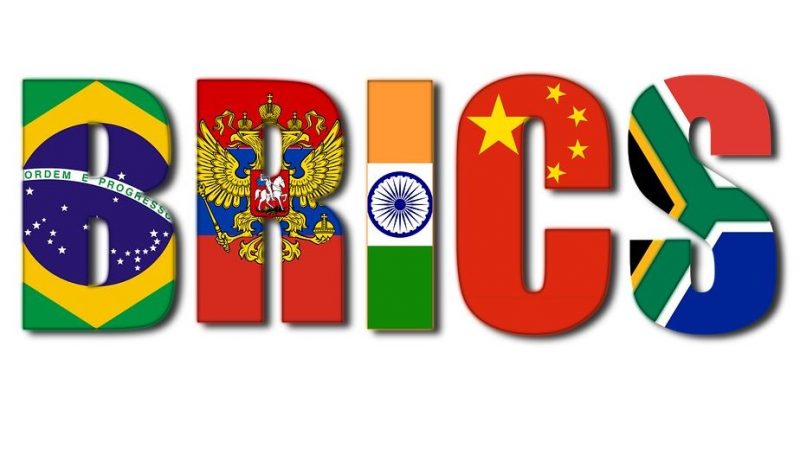
The absence of a consolidated reaction from BRICS to the strikes on Iran has become a telling signal not only for the organization itself but also for the entire international community. This is not about military assistance, since BRICS has never been and has not positioned itself as a defense alliance. However, the very fact that the bloc was unable to promptly agree on a common political statement in support of one of its permanent members raises questions, Rossa Primavera News Agency Political Desk wrote.
At a moment when a common position could have demonstrated the political weight of the association, there was silence. Individual countries issued statements and called for de-escalation, yet a unified BRICS voice was never heard. This stands in particular contrast to how actively the organization usually speaks about the need for an alternative to Western alliances.
For many years, BRICS has presented itself as an alternative center of power and as the voice of the Global South. Within such a framework, at least minimal solidarity would be expected when a member state comes under attack. In practice, however, the bloc’s countries preferred to act separately or limited themselves to general calls for de-escalation. As a result, the impression arises that at a critical moment the association is incapable of acting as a unified subject of international politics.
The reason lies in the heterogeneity of the organization itself. The BRICS countries have different relationships with the United States, Israel, and Iran; their economic interests and foreign policy priorities differ as well. For some participants, maintaining working relations with the West proves more important than demonstrating intra-bloc solidarity. Yet it is precisely situations like this that test political associations for resilience.
As a result, an uncomfortable question emerges: if the organization cannot present a consolidated position even after a strike against one of its members, how seriously should it be regarded as a geopolitical actor? Without at least minimal mechanisms for political response, BRICS risks remaining more of a discussion platform than a genuine center of power on which many countries outside Western alliances place their hopes.