The US’s absolute world dominance is worth postponing a human landing on Mars for a while
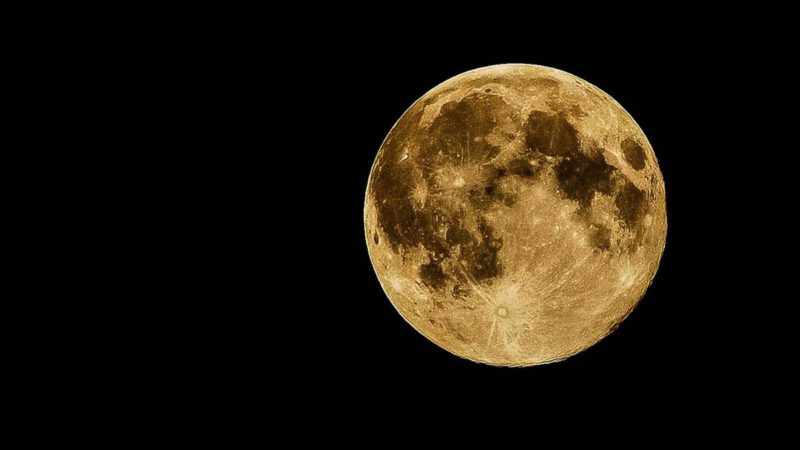
Early February, the richest man on the planet, Elon Musk, announced that his company SpaceX is suspending preparations for a human mission to Mars and is shifting its focus to participation in a new lunar race.
“It is only possible to travel to Mars when the planets align every 26 months (six month trip time), whereas we can launch to the Moon every 10 days (2 day trip time),” he explained.
It is hardly possible to consider this a plausible explanation, since there is nothing new in these calculations. Obviously, a strategic shift by a company as large as SpaceX did not occur overnight and was prepared in advance. After all, just a year ago Musk was saying the opposite, “We’re going straight to Mars. The Moon is a distraction.”
In his nearly three-hour interview with John Collison and Dwarkesh Patel, Musk attempted to explain the sharp change in strategy in the space race. According to him, artificial intelligence will begin to play an increasingly significant role in the very near future.
For its operation, “intelligence” requires enormous amounts of electricity. On Earth, this would necessitate building many new nuclear power plants and transmission lines. That is expensive, time-consuming, and requires constant and complex technical maintenance.
If, however, a large number of solar panels are deployed in space, the problem of obtaining almost free electricity for data centers would disappear. The data centers themselves would also need to be placed in space, since transmitting data to Earth via satellite is cheaper and faster than transmitting electricity. At the same time, this would address the issue of the vulnerability of these centers in the event of, God forbid, a major military conflict, including one involving nuclear weapons.
One possible solution, Musk believes, is to create a mass driver and develop production of the solar cells and the radiators on the Moon .
Recently, scientists discovered deposits of water at the Moon’s south pole. Water makes it possible to produce on-site the oxygen and hydrogen necessary for a settlement. And this shifts the creation of a habitable settlement on the Moon from the realm of science fiction into a technologically complex yet practically achievable task.
The implementation of such a plan would enable US companies to win the AI race. Analysts believe this would allow Washington to regain its leading position in the world, once again become the sole superpower, and this time remain so forever. Absolute world dominance — for that, it is worth postponing a human landing on Mars for a while.
It must be said that Musk is not the only one actively participating in the lunar race. The founder of Amazon, Jeff Bezos, is also deeply involved in projects for sending humans to the Moon. He is likewise actively engaged in the development of AI systems.
Bezos’s company Blue Origin is urgently developing a lunar lander that is to take part in NASA’s Artemis program. The goal of the program is to ensure a permanent human presence on the Moon. Naturally, under US leadership.
NASA, for its part, believes it will be able to use the projects of both entrepreneurs by integrating them into the aforementioned Artemis program. Musk’s heavy launch vehicle, Bezos’s lander, a lunar orbital station, as well as an inhabited settlement on the Moon — all of this is included in the near-term plans of the American space agency, which it intends to implement by 2030.
China is also participating in the new lunar race. Beijing has its own program, under which by that same year 2030 the Celestial Empire plans to land its taikonaut on the Moon.
What place Russia occupies in this race is a rhetorical question…
This is a translation of an expert from The power of words and the word of power article by Dmitry Vetchinkin, Maksim Karev, Olga Levandovskaya, first published in The Essence of Time newspaper, issue 661.