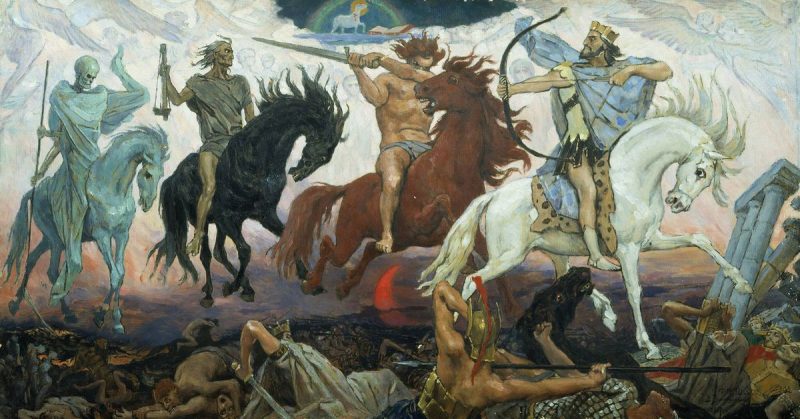
This year, the World Economic Forum was marked not only by the change of the main host, but it also revealed the conflicts between various competing global projects. Whereas previously the globalization project, in which the United States played the main role, reigned supreme, this year three alternative world order projects were announced by various groups.
Let us begin with the project presented by US President Donald Trump as part of the initiative “Make America Great Again.” Although Donald Trump devoted most of his speech to justifying US claims to Greenland and to criticizing Europeans’ behavior with respect to this issue, several experts discerned in his address a hint at the implementation of the “Greater America” project. Within the framework of this project, the United States is expected to merge into a single agglomeration with Canada, Mexico (possibly along with several other Latin American countries), and, of course, Greenland. There are many reasons why the United States is so interested in acquiring the world’s largest island, and they are analyzed in Essence of Time‘s leader Sergey Kurginyan comments, recently published on this web site.
Washington wants (and does not hide this) to take full control of the Western Hemisphere. At the same time, such “Greater America” would become not only the largest country by territory and the most economically powerful state on the planet, but would also be able to dispatch military expeditions to various parts of the Earth to subdue disobedient nations or conduct predatory raids. Let us recall that within the framework of combating the “shadow fleet,” the issuance of letters of marque is being actively discussed in the United States. This means a probable opportunity for the US to turn into a new Tortuga, with the only difference being that the historical Tortuga was merely a haven for Caribbean pirates of all kinds, without claims to statehood or hegemony, whereas “Greater America” possesses both the ambitions and, most importantly, the technological capabilities to realize them, including nuclear weapons and aircraft carriers.
In the past twenty years the world has existed in a unique situation in which the cheapness and accessibility of maritime transportation made local production of goods less profitable than exporting them. Paradoxical, but true. The famous Russian proverb “Overseas, even a heifer costs a polushka [roughly speaking half a ruble], but transport costs a ruble” temporarily lost its relevance.
In agriculture, the textile and light industries, electronics manufacturing, and even construction materials, global maritime logistics set the tone for globalization as a whole, managing the flows of resources, raw materials, and finished products.
At the turn of the 2010s, entire sectors of Western national economies began to wither, yielding to the onslaught of imports. The protests of European farmers against imported cheap agricultural products, which have become regular in recent times, are vivid evidence of this. But economic logic, reinforced by “properly directed” financial and credit flows, was relentless — maritime and ocean transportation made globalization more profitable than localization.
Now, however, the fight against the “shadow” fleet is a pretext and an opportunity for the United States to adjust globalization, which has wrongly developed. Because its main beneficiary turned out to be China, not the United States, and certainly not Europe.
The project presented by Beijing in Davos is the same “good old globalization,” but with a Chinese face. And there is no need to arrange a global restructuring of the world order, since everything is already developing in the way China needs.
Commenting on the speech of Chinese representatives at the forum, China’s Ministry of Foreign Affairs noted, “China intends to resolutely promote high-quality development, expand high-level opening-up to the outside world, advance universally accessible and inclusive economic globalization, and improve the international economic order.”
In other words, the Chinese communists stated that all the rules that have operated in the global economy suit them.
“We never seek trade surplus; on top of being the world’s factory, we hope to be the world’s market too,” emphasized Chinese Vice-Premier He Lifeng in his speech at the World Economic Forum. That is, Beijing has officially declared its claim to the role of the world’s leading superpower. And, in essence, it has thrown down a challenge to the United States.
The third type of projects announced in Davos involves the unification of second-tier powers into a third pole of strength in addition to the two existing ones — the United States and China. These second-tier countries realize that the struggle for leadership between Washington and Beijing is a fight to the death, but at the same time they do not want to side with either, understanding that in the strategic perspective they will gain nothing from doing so.
It is already obvious that the confrontation between the United States and China cancels all the rules of the game that previously existed. High-ranking US officials have stated this quite unambiguously and repeatedly.
The entire first year of Trump’s second presidency is vivid proof of this. Agreements are canceled, deals are broken, rules are not observed, and the main criterion of expediency is Trump’s sole personal opinion.
Only alliances of second-tier countries can participate on equal footing in this survival fight on the political map. There are several projects for such unification.
One option was voiced at the World Economic Forum by Canadian Prime Minister Mark Carney. It should be noted that Carney headed the Bank of England in London for a long time, and his connections with British elite circles are no secret; therefore, the opinion he voiced is not merely his own, but reflects the viewpoint of certain groups within the British elite. These groups are clearly dissatisfied with what Trump and his team are doing.
In his speech at the forum, Carney acknowledged that the old world order, based on rules, has ceased to function.
“When the rules no longer protect you, you must protect yourself,” he said. To survive, Carney proposed that the so-called “middle powers” unite. Although he did not name them in his speech, it is clear that by such powers he primarily meant Canada itself, the United Kingdom, and the countries of the European Union.
Indeed, their unification into a single alliance could provide industrial, economic, and military potential comparable to that of the United States. It is also clear that the gray eminence of the new union would be London, whose interests are significantly affected by Trump’s policies.
Beyond declarations, official Ottawa has already taken the first steps toward building relations with the world’s superpowers. On the eve of Davos, Carney paid an official visit to Beijing, where he held talks with Chinese President Xi Jinping. This visit marked the first meeting of the leaders of the two countries in eight years and opened a new stage of cooperation between Beijing and Ottawa.
It should be noted that previously Canada had not been particularly eager to build its own trade relations with China separate from the United States. But after Trump began pressuring the Canadians, threatening to incorporate the country into the United States, Canada decided that it was better to maneuver between two poles than to become the 51st US state.
Also unexpectedly, for the first time in eight years, British Prime Minister Keir Starmer paid an official visit to China and met with Xi Jinping. Most of the talks were devoted to trade and diplomatic interaction between the two countries.
The very fact of the initiation of dialogue between London and Beijing at the highest level already indicates a turn in British policy toward establishing closer relations with the world’s second superpower and moving away from automatically following US policy.
Another important participant in the alliance of second-tier powers should be a united Europe. However, Europe itself has its own views on its near future.
If the internal political balance within the EU is increasingly tilting toward Berlin and its new closest partner, Italy, then in foreign policy the European Union is frantically searching for new major markets for its products. The loss of the Russian market due to sanctions, combined with Trump’s desire to sell more to Europe than to buy the goods it produces, is forcing Europeans to turn their gaze toward Asia and Latin America. Thus, at the beginning of this year Brussels concluded a new large-scale trade agreement with India and an equally large-scale trade deal with MERCOSUR (the Southern Common Market), which still require the European Parliament’s consent, and the Council’s decision on conclusion for it to enter into force.
According to Indian Prime Minister Narendra Modi and European Commission President Ursula von der Leyen, they succeeded in delivering “mother of all deals.”
Under the agreement, India eliminates duties on almost 97% of European exports. As a result, India becomes for the European Union a vast market of nearly 2 billion people and a new production platform with cheap labor — that is, what China once became for the United States.
In the short term, the benefit for the EU economy is obvious. However, in the long run, India appears intent on repeating China’s path of development and surpassing the European Union in economic power. This means that India will turn into another sub-hegemon and begin dictating its own terms, as Beijing does now. Is Brussels ready for such a turn of events? Or does it hope that the world does not have several dozen calm years ahead, as China did?
Of course, Europe is grasping at India not out of a good life. The United States wants to cut off all pipeline supplies of oil and gas to Europe and supply energy resources only by tanker, while setting oil and gas prices on its own platforms. In doing so, the USA is destroying Europe as a competitor. India, which is closer to Europe than China, can deliver its goods to the EU overland. But here, too, everything comes down to logistics and control over transport corridors.
London, for its part, wants to take control of energy supplies from the East and manage them through Turkey. This is a major topic, with its own advantages, disadvantages, and complexities, and it deserves a separate article.
This is a translation of an excerpt from the article A Trump of Fire Towers o’er the World by Olga Levandovskaya, Dmitry Vetchinkin and Maksim Karev, first published in The Essence of Time newspaper, issue 660.