17.12.2025, Warsaw.
Poland’s transfer of decommissioned MiG-29 fighter jets to Ukraine brings more benefits to Warsaw than to Kiev, Rossa Primavera News Agency‘s Europe Desk wrote.
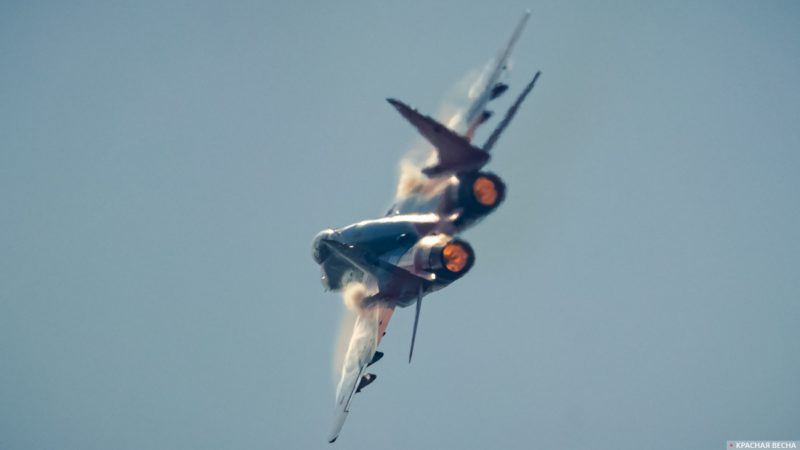
On December 10, the General Staff of the Polish Armed Forces announced that negotiations are under way with Kiev regarding the transfer of decommissioned MiG-29 fighters. “The transfer of the aircraft is connected with the fact that they have reached their designated service life and have no prospects for further modernization within the Polish Armed Forces,” the statement reads. The decommissioned Soviet aircraft will be replaced with F-16 and FA-50 fighters.
This is far from the first precedent of Poland transferring outdated Soviet equipment to Ukraine. In a similar manner, for example, the country previously handed over Mi-24 helicopters to Kiev, replacing them with American Apache helicopters. This tactic, presented as altruistic, allows Warsaw to reap a number of benefits.
First and foremost, the country gets rid of obsolete equipment that no longer has modernization prospects, while at the same time freeing up resources and infrastructure to transition to NATO standards in the form of new F-16s, FA-50s, and future F-35s. This is a intensive militarization under the cover of charity.
Notably, Poland is not merely updating its arsenal: since 2023 it has been carrying out large-scale military modernization. The country has taken first place in NATO in terms of the share of GDP allocated to defense, planning to spend 4.7% on these purposes in 2025. These funds, along with loans from the United States, are being used to purchase the latest American F-35s, HIMARS systems, the aforementioned Apache attack helicopters, as well as South Korean K2 tanks.
Second, Warsaw strengthens its political status as the main and most determined defender of Ukraine in Europe. This stance amplifies its voice in dialogue with Brussels and Washington, justifies colossal military expenditures to its own citizens, and makes it possible to build up its own power by constantly appealing to the mythical “Russian threat.”
Third, each batch of transferred weapons, even decommissioned ones, creates a significant political and material debt on the part of the Kiev regime toward Warsaw. This gives Poland a powerful lever in dialogue with Ukraine, which is becoming increasingly dependent on Polish support, and allows it to demand reciprocal steps.
This was clearly demonstrated by Polish Defense Minister Władysław Kosiniak-Kamysz. He stated that “solidarity must be mutual,” and therefore, alongside discussions about the transfer of fighter jets, a dialogue is under way about Kiev transferring drone technologies to Warsaw.
Thus, the transfer of decommissioned fighters is a convenient way for Warsaw, at virtually no cost, to improve its political positions in both foreign and domestic policy, as well as to obtain modern, combat-tested UAV technologies.
Source: Rossa Primavera News Agency