21.11.2025, Aleksandrovskoye.
If the expectation of a great historical event (Second Coming or establishing heaven on earth) is at the core of the culture of certain peoples, they are considered historical, political scientist, philosopher, and leader of the Essence of Time movement Sergey Kurginyan stated on November 7 in his video address on the 108th anniversary of the Great October Social Revolution.
He recalled that humanity is divided into historical, where the vector of development is directed toward the future, and non-historical, where development is cyclical.
The political scientist noted that “only that humanity is truly historical which, at the highest levels, called metaphysical, existential, essential – at the very highest levels – accepts History as a permanent basis of its being, as something good and, undoubtedly, fateful, fundamental.”
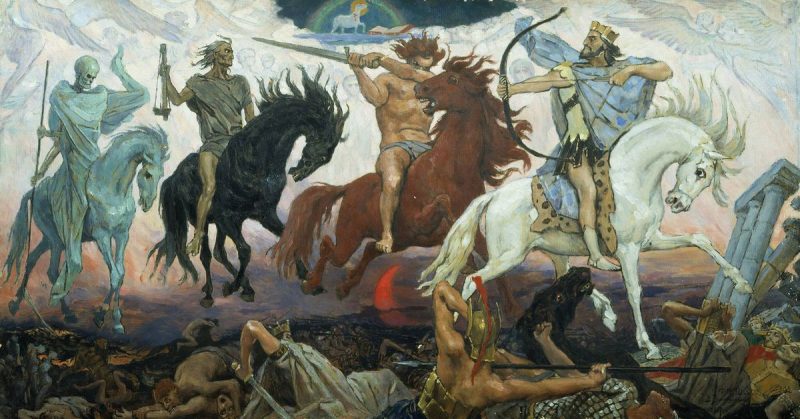
Kurginyan emphasized that a historical vector is always created by religions if they harbor the expectation of a great historical event—for example, the Second Coming, the advent of heaven on earth, the coming of the Messiah—”if within certain peoples this expectation is intense and passionate and resides at the core of culture, at the core of human existence.”
“In these communities, peoples, small worlds – something more complex than civilizations – in these communities, at their core, at the very heart of their existence, lies a hope for history and the future. A hope for this future, the greatness in this future,” Kurginyan noted.
He clarified that the anticipation of a “star of captivating happiness,” some great blessing, is not something that exists in all core cultures or communities. However, communities lacking this expectation are not “bad” or inferior. It’s simply that “there are historical peoples, and there are non-historical ones.”
However, according to the political scientist, historical humanity is not united. The West is the primary historical humanity, since Christianity is directed toward the future. However, the West placed its bets on capitalism, and World War I already brought such disillusionment with history that fascism began to develop there, under which the “wheel of history” must be reversed. Then came the Russia’s turn – an alternative historical humanity, which, by carrying out the Great October Social Revolution, demonstrated that another path exists. The Bolsheviks religiously believed in history.
If peoples beliefs are cyclical then history does not exist for them.
“The arrow of history is directed toward the future. And where a linear historical time or a more complex historical time exists and directed one way or another toward the future – where this takes place, and it is fundamental – there historical peoples exist. ‘And where they says, ‘Now there’s a cycle of growth, and then there will be a cycle of decline… And now such-and-such a god exhaled, and everything arose… And when a certain god inhales, everything will disappear…’—there’s no historicity as a passionate, supreme instinct and belief that defines the existence. It doesn‘t exist,” Kurginyan explained.
An example of a non-historical civilization is China, where, generally speaking, life flows along the Zhōngguó axis, which runs through China. When the deviations from it occur, morals deteriorate and everything begins to collapse. When the axis is restored, morals improve and everything begins to improve. He also noted that a non-historical community can develop rapidly.
“History is not something that is equally important to everyone. History is something that is emotionally intense and crucially fateful for historical humanity, which is divided into the main (or obvious) and the alternative,” Kurginyan emphasized.
Source: Rossa Primavera News Agency