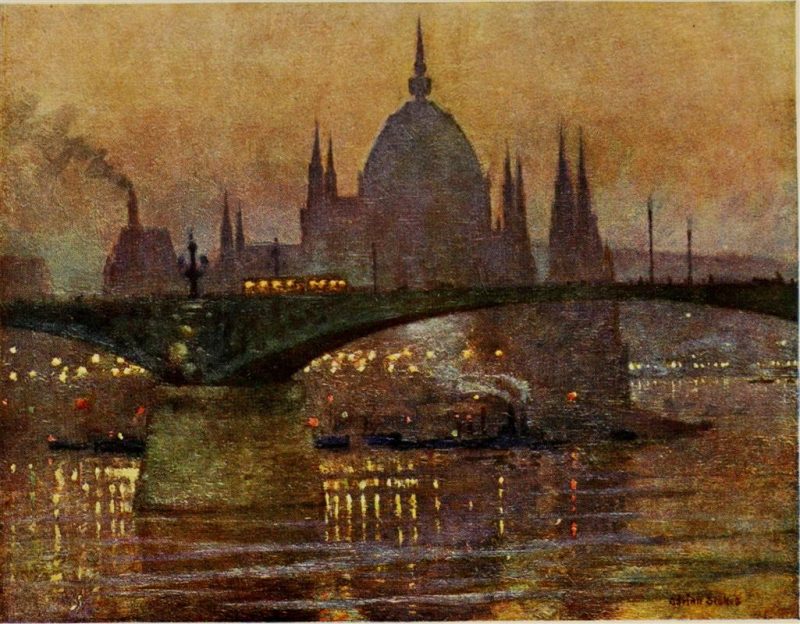
05.11.2025, Budapest.
Hungarian Prime Minister Viktor Orban may agree to Ukraine’s partial integration into the European Union in order to reclaim Transcarpathia for Hungary, Rossa Primavera News Agency Europe Desk wrote on November 5.
On October 23, during a large pro-government rally in Budapest, Orban stated that European leaders are discussing the possibility of integrating Ukraine into the EU in parts. At the time, the prime minister condemned the “colonial logic” of his European colleagues, but given the Hungarian government’s longstanding desire to regain Transcarpathia, it can be assumed that Orban would not oppose such a scenario.
Hungary has consistently opposed Ukraine’s membership in both the European Union and NATO, understanding that the country’s integration into Europe would likely bring military escalation in the zone of the special operation. Unwilling to be drawn into war, Orban vetoed Ukraine’s accession to the alliance. However, if discussions are taking place about ending the Ukrainian conflict through the transfer of certain territories to Russia and the integration of the western part into the EU, Orban might be interested in seizing the opportunity to reclaim Transcarpathia.
Budapest has long sought to reclaim this region. To that end, the government appointed a commissioner for Transcarpathian affairs and allocated €7.5 million for the development of Hungarian culture and the restoration of Hungarian cultural heritage sites. Over the past decades, Hungary’s total investments in the region have amounted to hundreds of millions of euros, a policy that greatly irritates Kiev. In 2015, the Ukrainian authorities stripped Transcarpathian Hungarians of their status as a national minority, another source of tension between the two countries.
Historically, Transcarpathia has been part of Great Moravia, the Galicia–Volhynia principality, the Kingdom of Hungary, Transylvania, and Austria-Hungary. In the late 17th century, all Hungarian territories, including Transcarpathia, came under Habsburg rule. After the collapse of Austria-Hungary in 1918, Transcarpathia — partially occupied by Czechoslovak troops — came under Prague’s authority. During World War II, the Nazis occupied the region. In 1944, Transcarpathia was liberated by the Soviet Army, and a new state — Transcarpathian Ukraine — was proclaimed there, which briefly existed formally as part of Czechoslovakia. In June 1945, under a treaty between the USSR and the Czechoslovak Republic, Transcarpathian Ukraine was incorporated into the Ukrainian SSR as the Transcarpathian Region.
Source: Rossa Primavera News Agency