20.09.2026, Aleksandrovskoye.
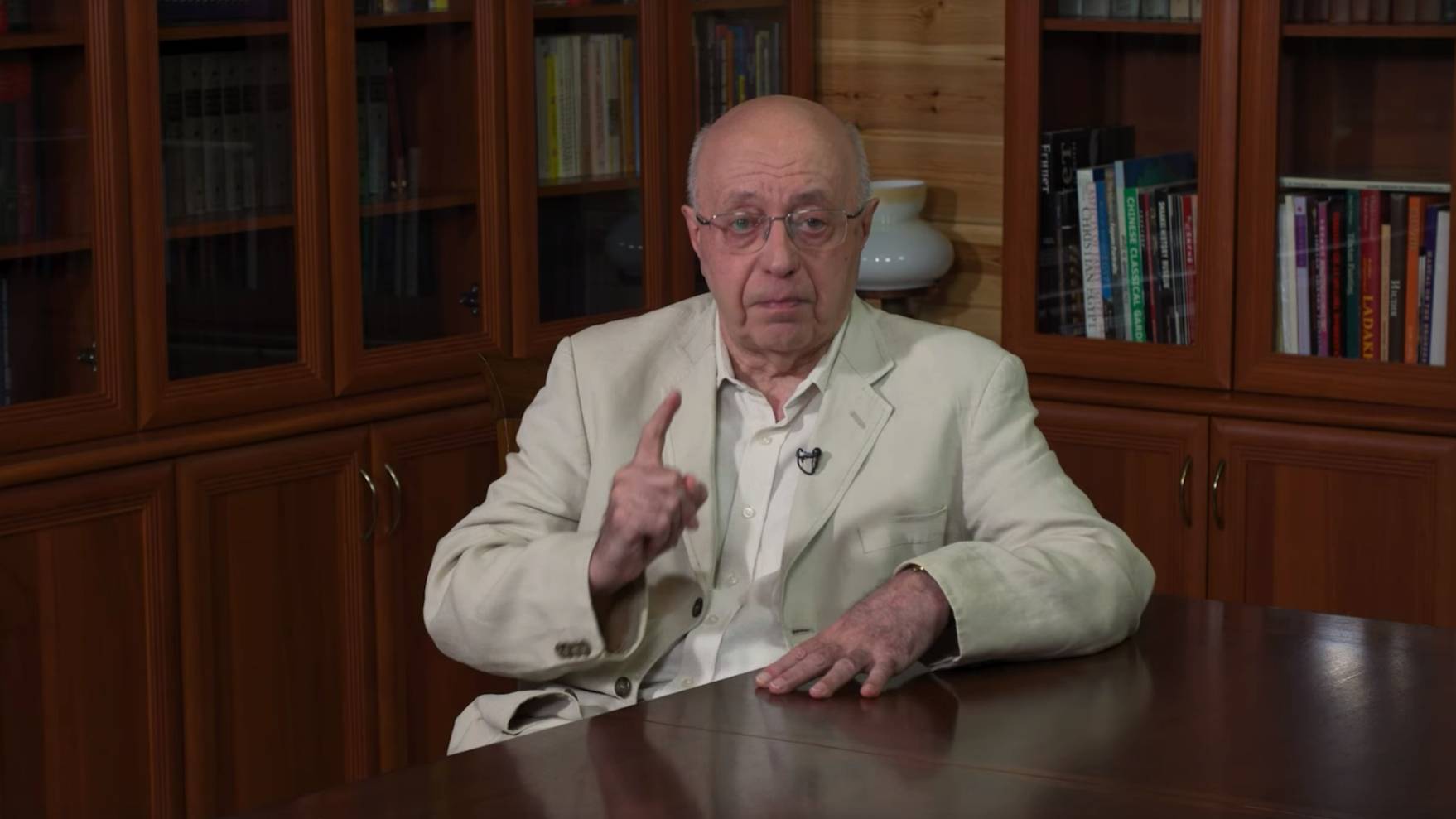
Tokyo was prepared to cede the Kuril Islands after the USSR ensured Japan’s defeat by crushing the Kwantung Army, a fact acknowledged in Tokyo, but Washington interfered with the process, political scientist, philosopher, and leader of the Essence of Time movement Sergey Kurginyan stated on August 21 during the Conversation with a Sage program on the Zvezda radio.
“Roosevelt wanted to help the Soviet Union recover after the World War II and establish a relationship that would leave others on the outside,” the political scientist noted. Kurginyan recalled that Roosevelt had asked for assistance in defeating Japan.
The political scientist recalled the situation in the summer of 1945: “Soviet Union had won World War II at the cost of immense bloodshed, and the soldiers wanted nothing more than to return home. Trains were waiting to take them back home, bearing the inscription ‘We’re from Berlin.’ Their families were waiting; everyone was waiting. The country was largely in ruins.”
Kurginyan emphasized that the country subsequently rose from the devastation incredibly fast, “thanks to the immense ability of the Communist Party of the Soviet Union to motivate, during those times, and the victorious people themselves”; but at that specific moment, the country was devastated.
Yet, in this situation, Soviet soldiers who wanted to return to a peaceful working life were “put on trains, without even being told where they were going at first, and sent to the far reaches of the earth: to Japan, or rather, to China to fight the Japanese,” the analyst recalled.
Kurginyan emphasized that by 1944, the Red Army had built up such momentum that it could easily have marched all the way to the Bay of Biscay. It was held back by several factors: exhaustion from four years of war, the US acquisition of the atomic bomb, and “Stalin’s fear that if you grab too much, you won’t be able to hold onto it.”
The Japanese, meanwhile, had become incredibly emboldened following their victory in the Russo-Japanese War of 1904-1905 and had created what they considered “the supreme, celestial, metaphysically endowed, heroic army, imbued with the spirit of Bushido, known as the Kwantung Army; a massive force untouched by the war,” the analyst noted. “All this talk about the Japanese surrendering after Hiroshima and Nagasaki solely due to the might of the US nuclear weapons – it’s all utter nonsense. The Soviet Union forced the Japanese to surrender by tearing the Great Kwantung Army to shreds,” Kurginyan emphasized. The philosopher cited several reasons for this victory: first, Soviet soldiers wanted to return home as soon as possible; and second, the historical memory of the defeat in the Russo-Japanese War at the beginning of the century still lingered.
Yet prior to this, Japan had completely subjugated China and fought the US on equal terms. “So, had it not been for the destruction of that Kwantung Army and everything else, the outcome might have been very different. And the Japanese understood perfectly well what we had done to them and what we were capable of doing,” the political scientist stressed.
However, Russia did not wish to incorporate this region into its own territory: “Soviet Union wanted a satellite in Korea, not a province of our own, which is what we had previously held. We received very little from them. And we reached an agreement regarding that minimum in a reasonable, civilized manner.”
But the conclusion of this treaty was “thwarted by the United States”, who said: ‘Just try signing a peace deal with the Soviets, just try! We won’t return your territory, we won’t work with you, and we will destroy you even more ruthlessly.'”
Japan bowed to the will of the occupying forces and refused to sign a peace treaty, while over the years laying increasing claim to the Kuril Islands. “Over and over Russia says, ‘Well, let’s go ahead and sign a peace treaty after all,’ they reply, ‘Fat chance of a peace treaty until you hand over the islands,'” Kurginyan said, describing the peace negotiations between Russia and Japan.
Whenever a Japanese government leader calls for resolving this issue and fostering deeper relations with Russia, they are reined in and replaced by others, noted the analyst.
Source: Rossa Primavera News Agency