13.09.2026, France.
Heat comes to France more and more often, starts earlier and lasts longer, creating very favorable conditions for fires.
Every summer in France, the risk of forest fires increases, threatening vast forest areas. From time to time in regions such as Corsica, Provence, the Landes, Gironde, and Languedoc-Roussillon, fire destroys thousands of hectares of vegetation.
In recent years, this phenomenon has taken on a new scale: heat comes more and more often, starts earlier and lasts longer, creating very favorable conditions for fires.
In 2026, the situation became very severe: air temperature began to rise sharply as early as May 21, and on May 26 the thermometer reached 37°C in Angoulême, Narbonne, and Perpignan. And from June 17 to 30, France was struck by exceptionally intense heat. It lasted 14 days and broke all records.
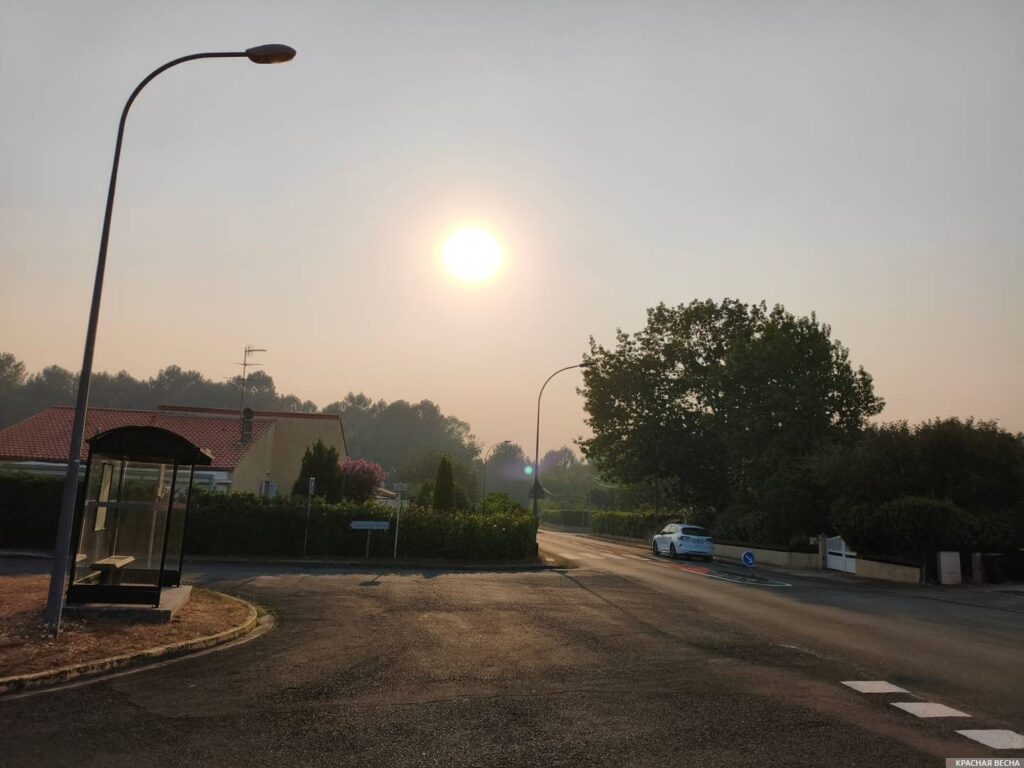
Heat. France
In Cherbourg, the temperature rose to 37°C (the previous record was 33.7°C); in Nantes — 42.2°C; in Rennes — 41.5°C; in Bordeaux — 42.5°C; in Poitiers — 41.8°C; in Saintes — 43.8°C; in Paris (Luxembourg Gardens) — 42.2°C, which became a record for June.
At the height of the June heat, a “red” danger level was declared in 72 of the 96 departments of mainland France, which is approximately 75% of the country’s territory.
A second wave lasting 16 days swept across the country from July 4 to 19: the temperature again exceeded 40°C.
The third heat wave, according to Météo-France, began on July 28 and continued until August 17, with temperatures again approaching 40°C on some days.
Statistics have revealed a trend: of the 54 largest heat waves recorded between 1947 and the end of July 2026, more than half occurred in the last 15 years (from 2011 to 2026). Moreover, current heat waves are characterized not only by the highest temperatures but also by the greatest duration.
The cause of such weather anomalies this summer was a powerful anticyclone over the Atlantic that spread to Western Europe. It blocked the possibility of cool Atlantic cyclones arriving, and the wind circulation around it carried scorching air from North Africa: flows originating over the Sahara first covered the Iberian Peninsula and then reached France. Upon reaching heavily heated ground, this air heated up even more: due to a lack of moisture in the soil, there was practically no evaporation that could have cooled the atmosphere.
Paradoxically, the past winter in France was exceptionally rainy: abundant precipitation significantly replenished underground aquifers, especially in the western and southwestern parts of the country. However, the heat of May and June — that is, when summer had just begun — rapidly dried out the soil. And in southern France, the thermometer can rise to 30 degrees even at the end of October.
In such heat, the main concern for most of the population became how to finish a shift in a room where the air temperature is around 30°C. And also how to get at least a little sleep at night when the heat does not subside and the stuffiness, in the absence of wind, seems to seal up the rooms. Since only about 25% of residential premises are equipped with air conditioners — mainly in the south of the country — most French people simply had nowhere to hide from the heat. People sought salvation where they could: some even slept in parks on the grass or in cars with air conditioning.
And nature seemed to be just waiting for this moment to remind us: the fire season has arrived — and it struck with all its destructive force.
The Fire in Fontainebleau
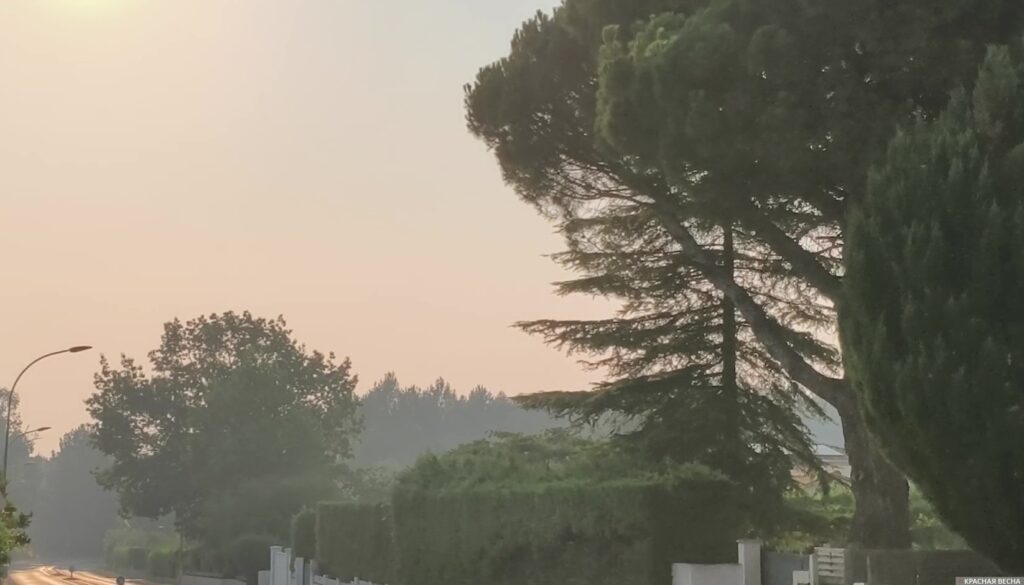
The sky was covered with smoke from forest fires. France
On July 12, the forest of Fontainebleau caught fire. The fire began toward evening not far from the A6 highway, in the area of Achères-la-Forêt, Noisy-sur-École, and Le Vaudoué. Due to drought and extreme heat, the flames spread at a frightening speed. Already on July 13, reports appeared of new outbreaks — in particular, in the area of Le Fazanderie. By that time, the fire had engulfed about 800 hectares, and several hundred firefighters were battling the blaze. Additional forces later joined them.
The peak of the fire’s spread came on July 14: the total area of burned territory exceeded 2,000 hectares. Residents of villages near the epicenter of the fire were evacuated. Subsequently, rescuers managed to bring the situation under control.
By the end of July, the fire was considered localized: the flames were stopped, but inside the burned zone there remained smoldering areas, “hot spots,” and individual tongues of flame, so it was necessary to continue monitoring the affected territories and dousing them with water.
It was very difficult to cope with the fire: at the height of the operation, up to 950 firefighters and rescue service personnel were working at the scene. From the air, the fire was extinguished by four Canadair amphibious aircraft, two Dash aircraft, and three helicopters — water bombers. In addition, one police helicopter participated in the operation as support.
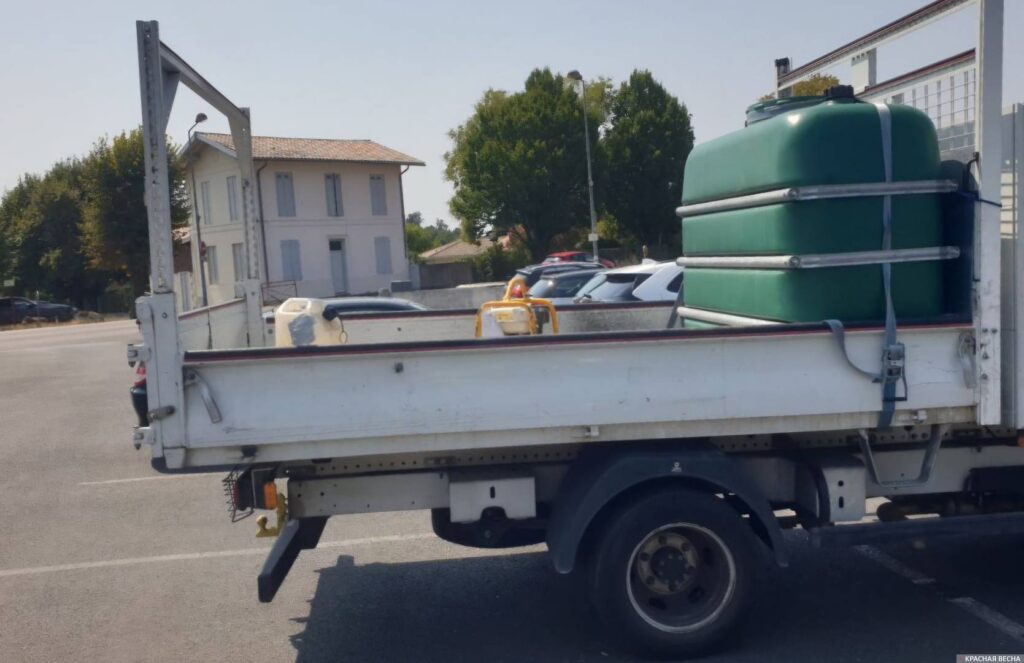
Builders and road repair specialists delivered water in containers. France
About a hundred farmers from the departments of Seine-et-Marne and Essonne also provided significant assistance: they used tractors and tankers to replenish water supplies in fire engines and irrigate individual areas. This allowed rescuers to save time on refueling. Some farmers used cultivators to create or strengthen firebreaks. In addition, farmers know the local roads, fields, and terrain well, which accelerated the movement of fire crews.
The forest of Fontainebleau is a special place: its area is about 25,000 hectares; it combines natural, historical, and cultural heritage. Its landscape is extraordinarily diverse: large sandstone rocks, gorges, piles of stones, sandy areas, oaks with centuries-old history and bizarrely curved trunks. In the 19th century, the forest inspired the masters of the Barbizon school — Théodore Rousseau, Jean-François Millet, and later the Impressionists, including Claude Monet. Today the forest is recognized as a UNESCO biosphere reserve, is famous for its rich biodiversity, and is a cult place for rock climbers thanks to thousands of sandstone boulders and marked routes. In addition, it is closely linked to the Château de Fontainebleau: for centuries these forests served as hunting grounds for French kings, including under Francis I and Louis XIV.
And this summer, 2,050 hectares of the unique forest were destroyed by fire. In comments to media reports, the French expressed indignation, drawing parallels with the fire at Notre-Dame Cathedral in April 2019: “Under Macron, France’s historical heritage is turning to ashes.”
The causes of the ignition have not yet been definitively established, but the first investigation data point to a human factor, as in 9 out of 10 cases of wildfires.
The gendarmerie made several arrests of those responsible. Thus, one man confessed that he had started the fire using a lighter and gasoline. The investigation into this case continues.
Law enforcement representatives, in interviews with French television, said that large fires often attract arsonists: taking advantage of the fact that the main forces are engaged in extinguishing some areas, malefactors try to create new outbreaks in other places.
The Heritage Foundation launched an emergency fundraising campaign to restore the Fontainebleau forest after the July 2026 fires. Initially, they planned to raise €2 million. By the end of July, more than €1 million had been raised (more than 7,500 people took part in the campaign). The funds will be directed toward restoring burned areas, ecological restoration, maintaining biodiversity, restoring natural balance, as well as measures to increase the forest’s resilience to future fires and climate change.
The Fire in Var
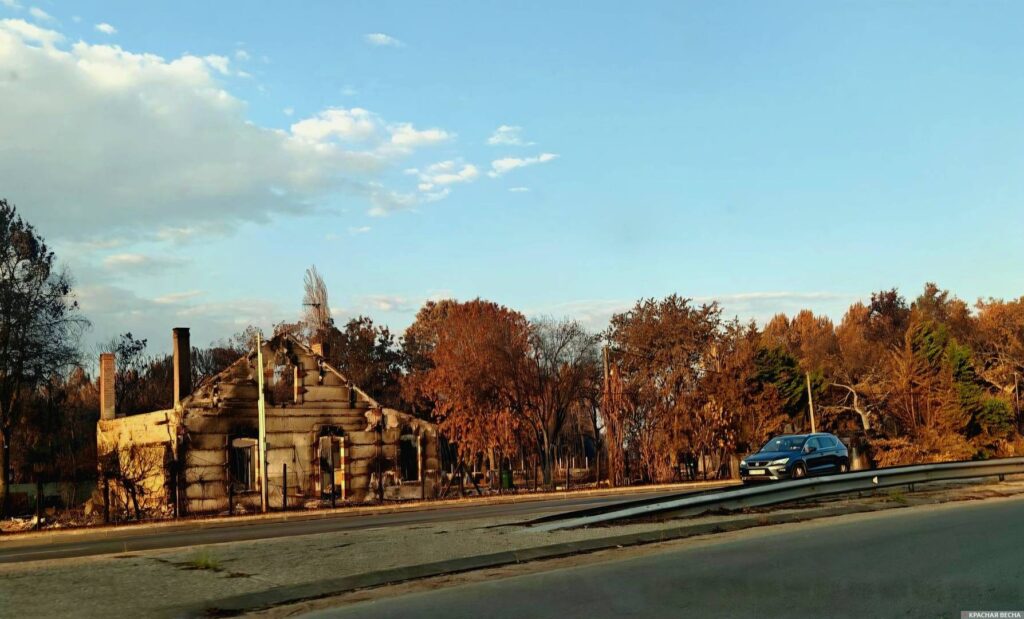
A burned house. Forest fires in France
Before the flames in Fontainebleau had subsided, news feeds were full of reports of a new fire — this time in the department of Var (administrative center — the city of Toulon, region Provence-Alpes-Côte d’Azur).
The fire started on July 21, 2026, near the commune of Ponteves in the center of the Var department. And the flames very quickly reached the Gros Bessillon massif, driven by heat, drought, and wind. Within a few hours, the fire was out of control and began to threaten several municipalities.
In the first stage, several hundred hectares of forest burned, but then the fire began to spread rapidly further. It was very difficult to fight it: the air temperature was 38-40°C, the vegetation, due to the Mediterranean climate, was extremely dry, and the hot wind blew at speeds up to 55 km/h. Moreover, the wind direction constantly changed, making it practically impossible to predict the direction of the flames.
Firefighters gradually managed to slow the fire’s advance, but they could not fully cope with it — new outbreaks constantly flared up in forested areas.
The situation escalated again on July 31, especially in the areas of Correns and Vallon Sourn, a picturesque valley in the Var department. Within a few hours, the fire destroyed more than 1,000 hectares of forest. About 2,500 residents of nearby municipalities had to be evacuated from this area. Additional forces were brought in to fight the fire.
The Fires in Le Val
On August 6, the prefect announced the intensification of the fire front and a new wave of evacuations — this time from the town of Le Val, from which about 4,000 people had to be evacuated. About 850 firefighters and 250 units of equipment, as well as aviation — Canadair aircraft, Dash aircraft, and helicopters — water bombers, were deployed to fight the fire. Firefighting aviation from EU countries provided significant support: France had to use external reserves due to a shortage of its own capacities. In addition, about 335 servicemen from engineering troops and Civil Defense units were involved in the operation, and two hundred gendarmes ensured security and helped conduct evacuations.
Local farmers also played an important role in extinguishing the fire: olive tree, fruit, and aromatic herb cultivation is widely developed in the region, and therefore many farmers joined the fight against the fire. On their tractors, they delivered water for fire engines and helped irrigate individual areas, containing the spread of the flames.
The Fires in Gros Bessillon
After 18 days of intense struggle, on August 7, the large fire in Gros Bessillon was localized. This meant that it was no longer actively spreading, but it was not yet fully extinguished: firefighters continued to keep the situation under control to prevent new outbreaks of fire.
The consequences of the fire were serious: more than 6,000 people were evacuated, 70 houses were damaged (41 of them completely destroyed), and the total area of burned territory was about 6,300 hectares. The authorities are still monitoring the situation, and access to certain areas remains restricted. An investigation is underway to establish the exact cause of the fire — arson is among the versions being considered.
At the height of the fight against the fire in the Var department in the southwest of France, even more dramatic events unfolded in Gironde.
The Fire in the Landes Forest
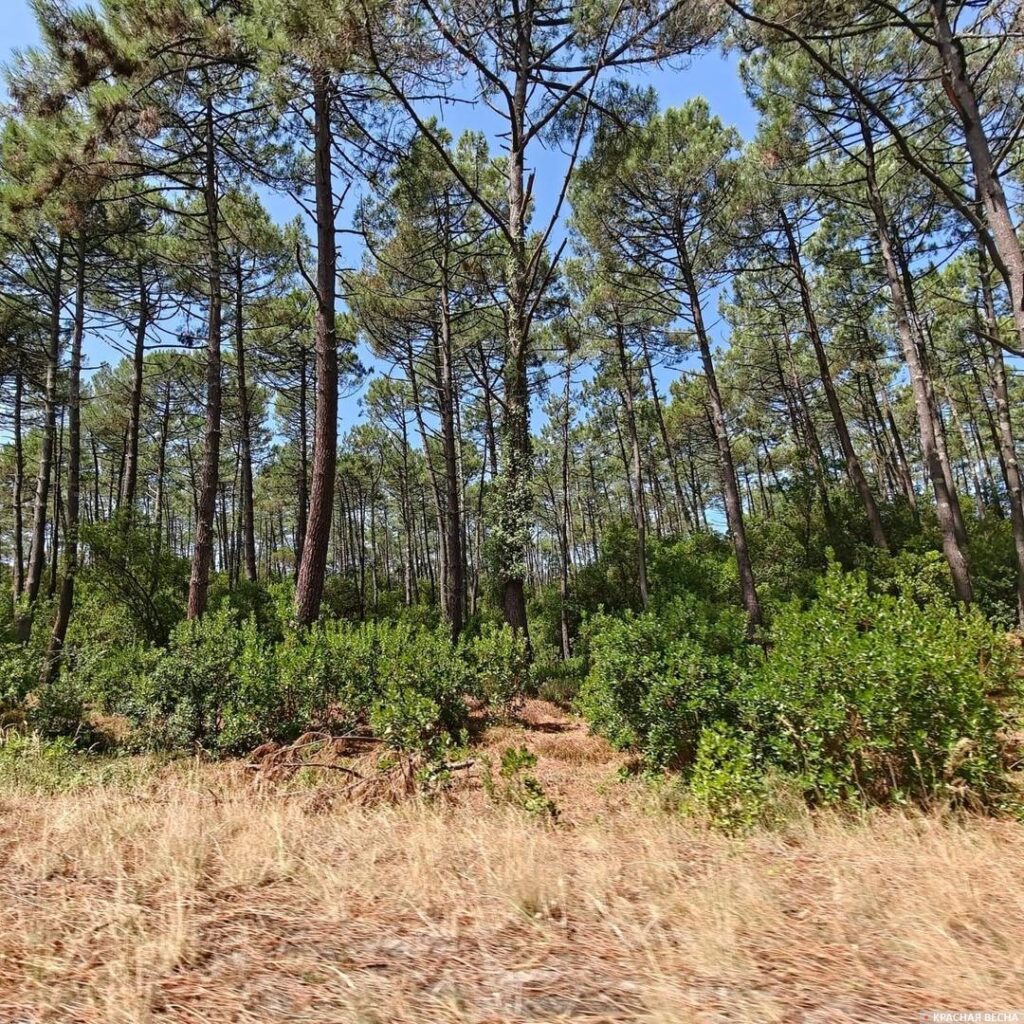
The Landes Forest
In the region of Nouvelle-Aquitaine, on the territory of the departments of Gironde, Landes, and Lot-et-Garonne, stretches the largest man-made forest massif in Western Europe — the forest of Landes and Gascony (also called the Landes forest). Its area is about 1 million hectares.
The history of this forest is closely linked to the large-scale transformation of the region. Since the end of the 18th century and throughout the 19th century, French engineers developed methods of stabilizing the dunes of the Atlantic coast with the help of forest plantings: this made it possible to prevent the sanding over of agricultural lands and villages. Before large-scale afforestation, a significant part of the region was poorly drained land and swamps. These vast open territories were used mainly as pastures: sheep were grazed here, and shepherds moved on stilts.
The forest began to be planted systematically as early as the reign of Napoleon III. The law of June 19, 1857, obligated communes to drain and plant with pines a significant part of communal lands in certain departments. The planting of forests pursued primarily economic and social goals: France had entered the era of modernization; it was necessary to develop territories, create an industrial base, and promote population growth.
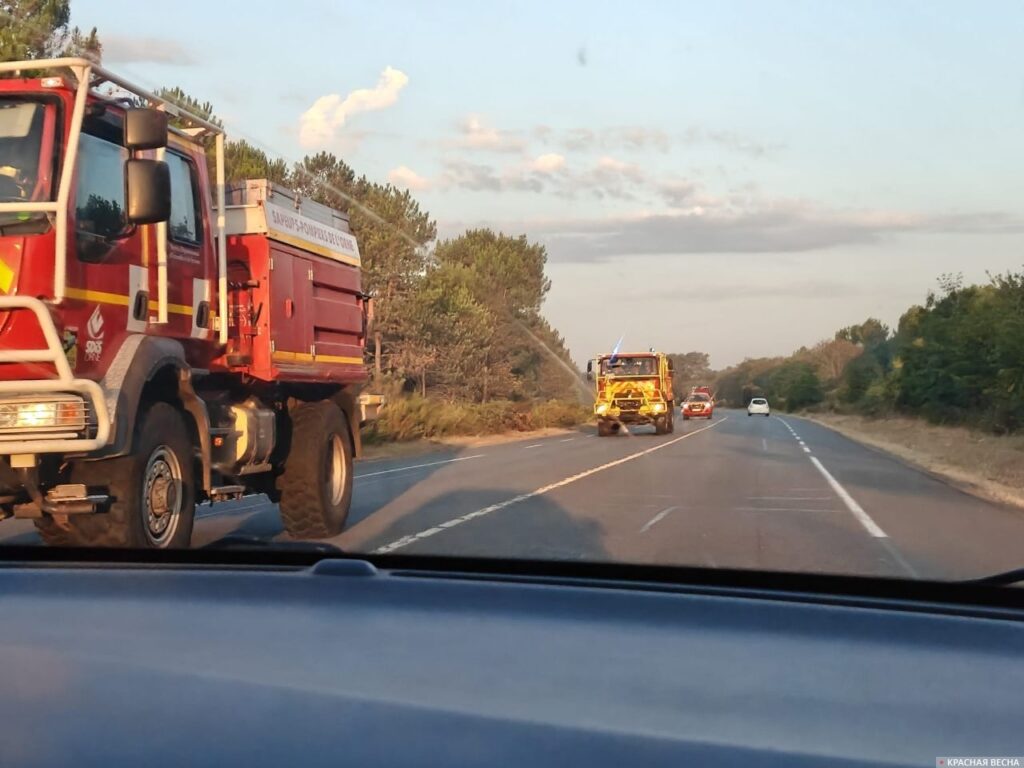
Extinguishing forest fires. France
After a series of tests, the maritime pine (Pinus pinaster) was chosen as the planting material — a local species that had already naturally colonized some parts of the coastline. The pine forest helped drain the swampy lands: according to specialists’ estimates, a 35-year-old maritime pine can evaporate up to 8 tons of water per year. This sharply reduced the number of mosquitoes and the spread of infections they carry — previously, malaria fever was often recorded in the region.
Afforestation turned out to be an economically advantageous solution. The maritime pine quickly took a leading position: it took root well in the Landes soil and allowed for profitable management — including through resin extraction. Today, pines make up about 85% of the trees in the forest massif.
A century and a half of planting a pine monoculture and intensive exploitation of the forest have led to serious ecological consequences. Regular clear-cutting and replanting maintain an extremely homogeneous forest landscape. After felling, the soil is more exposed to the sun and wind, and this increases moisture loss. As a result, the Landes forests have come to be distinguished by low biodiversity — especially in comparison with forests with a diversity of tree species, where deciduous trees and wet zones have been preserved.
At the same time, ferns and dry vegetation are widespread in them, but they increase the volume of combustible material and thereby increase the risk of fires, especially during periods of drought and intense heat. Large pine areas, combined with dry vegetation and insufficiently moistened soils, create conditions for the rapid spread of fire.
The Fires in Gironde
Large fires in forest massifs in southwestern France occurred frequently. In Bordeaux, the memory of the 1949 forest fire — one of the deadliest in the country’s history — has been preserved. The fire raged from August 19 to 25, 1949, and devastated a significant part of the Landes and Gascony massif: 52,000 hectares were engulfed by fire. The tragedy claimed the lives of 82 people; among the dead were firefighters, military personnel, employees of the Eaux et Forêts agency (“Waters and Forests” — a historical agency that was responsible for forests, water resources, and hunting — note by Rossa Primavera News Agency), and volunteers. On August 24, 1949, a day of national mourning was officially declared in France in connection with the forest fires in Gironde.
The scale of the catastrophe was so great that it became a turning point: it was after it that France began systematically building forest protection from fires. Approaches to forestry and fire safety were revised, new methods for tracking and localizing ignitions were developed, and civil defense forces were significantly strengthened.
This year, the series of severe events associated with summer fires in Gironde began on July 22 — with an ignition in a forest zone near the international airport of Mérignac in the north of Bordeaux. The cause of the fire was a cigarette butt thrown by a 15-year-old teenager. Due to the wind, the fire spread rapidly and ultimately engulfed about 12 hectares before it was brought under control.
As a result of the emergency, two professional firefighters died — both were 34 years old. They were trapped in flames in their tanker truck.
Against the backdrop of this news, on July 22, reports came of a large fire in the Landes and Gascony forest north of the Arcachon Bay. Around noon, near the town of Saumos, a tractor with a brush cutter (a special machine with rotating metal teeth), on the instructions of the operator of the Enedis electricity distribution network, was clearing shrubs under power lines. Sparks from the brush cutter ignited the dry vegetation.
At present, the question of the legality of carrying out such work in the current weather conditions is being considered.
Two workers tried to extinguish the incipient fire with fire extinguishers, but without success: the fire spread rapidly, engulfing more and more hectares of forest. Fire crews arrived at the scene promptly, and in less than an hour the first water-dropping aircraft was deployed. However, the elements proved stronger.
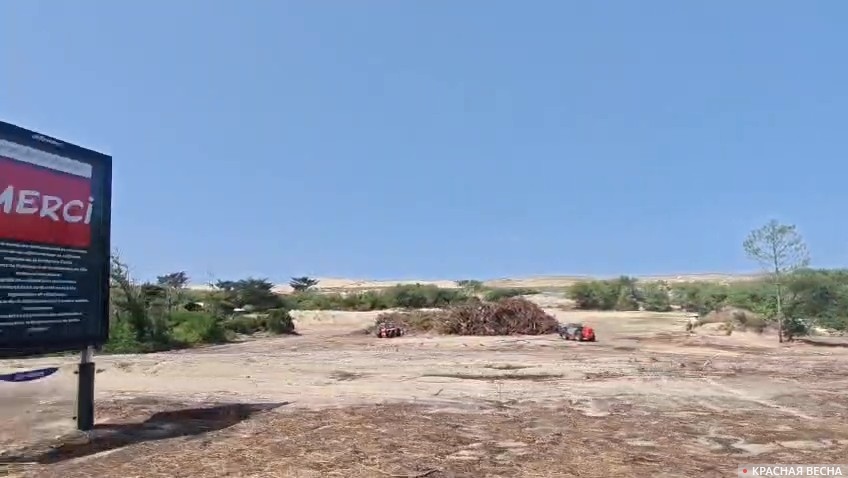
A clearing. A firebreak near the town of Lège-Cap-Ferret
In the early morning of July 23, the evacuation of residents of settlements at risk was announced. The fire engulfed more than 2,000 hectares; its front stretched for about 15 km. The flames continued to move toward the town of Porge and the Lège-Cap-Ferret peninsula.
The wind changed direction several times since the fire began. Because of this, the head of the firefighting operation characterized the fire as “unpredictable.”
The authorities reported on the courageous struggle of firefighters with the fire, supported by aviation: two Canadair water-dropping aircraft, two Dash 8 aircraft, and four Air Tractor aircraft. However, the residents of Gironde could not help but recall the catastrophe of 2022, when during a record summer drought, fire destroyed up to 7,000 hectares of forests in the area of La Teste-de-Buch in the south of Arcachon Bay. Everyone hoped that the lessons of that fire had been learned and that a disaster of such a level would not happen again in the region. However, the current fire surpassed the most pessimistic forecasts and turned out to be the strongest in the last 75 years.
On July 23, after lunch, new trouble came: on a road not far from Biscarrosse (a town south of Arcachon Bay, in the Landes department), a car caught fire and the flames spread to the vegetation. The fire spread quickly, ultimately engulfing more than 2,600 hectares. At the height of the crisis, more than 31,000 people were evacuated (the flames were localized by July 27 and fully extinguished by July 31).
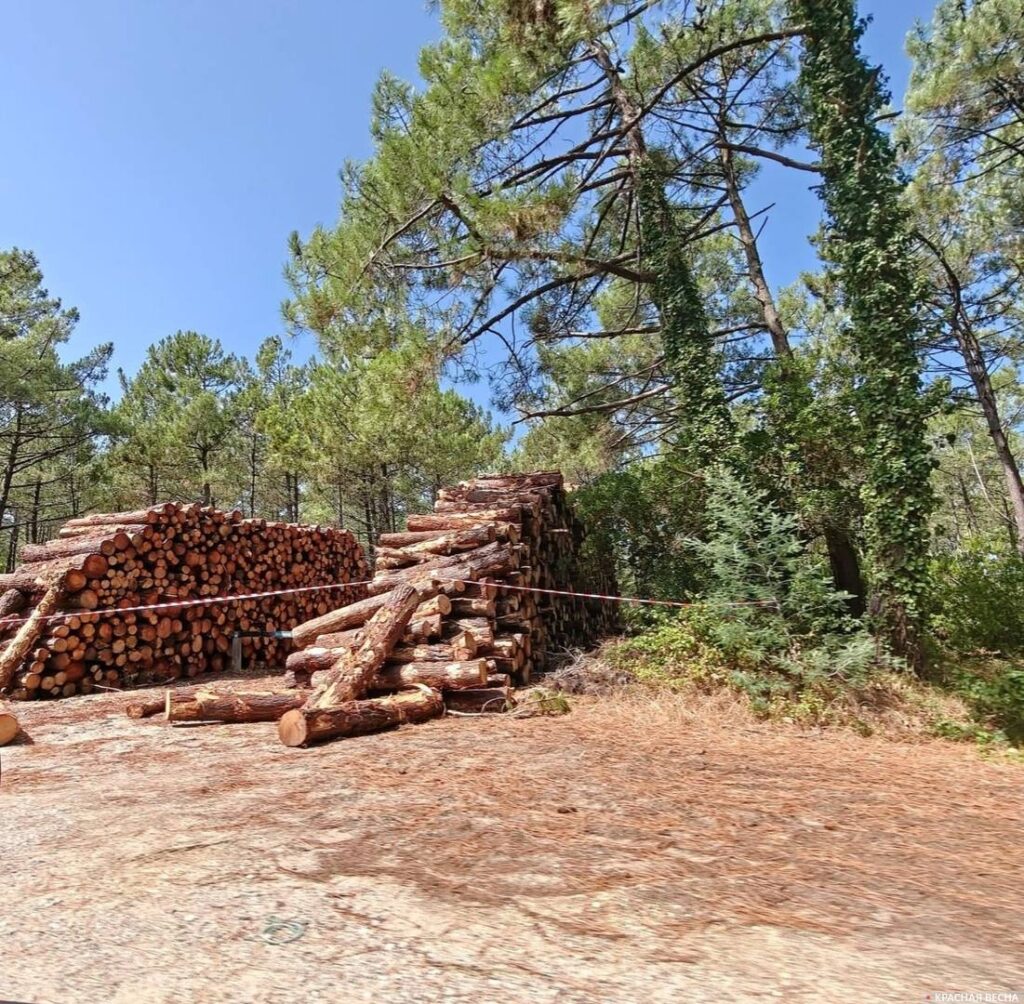
Forest cut down in a clearing. Forest fires in France
Now the firefighting forces had to fight on two fronts — in Gironde and Landes. Those who communicated with firefighters on the ground spoke of their exhaustion and fatigue. Union activists began to inform the public about the real problems of fire defense: the shortage of fire tanker trucks, professional firefighters, and volunteers — that is, problems that the authorities had not solved for years.
On the night of July 23-24, France activated the European civil protection mechanism (rescEU). Soon, two Canadair aircraft from Croatia, two Air Tractor water-dropping aircraft from Portugal, and one Black Hawk helicopter each from Czechia and Slovakia were to arrive in the region.
On the morning of July 24, Interior Minister Laurent Nuñez announced that the fire in Gironde had engulfed more than 10,000 hectares and had begun to threaten the Lège-Cap-Ferret peninsula. The evacuation affected 40,000 people, and the fire front reached 30 km.
Every Bordeaux resident understood the gravity of the situation on July 24 by 4-5 p.m.: the metropolis was enveloped in dense, thick smoke from the burning forests. The media began to speak of a “megafire” (“a fire of exceptional scale“). France’s Ministry of Ecological Transition defines a megafire as an exceptional and uncontrollable fire capable of “creating its own climate, including strong winds and firestorms.”
A forest fire that begins with so-called “fine” fuel — grass, pine needles, dry twigs — gains strength and moves on to larger materials: shrubs, roots, deep layers of pine litter. They release much more heat and are capable of smoldering and flaring up again for a long time even after the main flame has moved on. But the most dangerous thing begins when the fire reaches such intensity that it begins to change the surrounding environment.
The situation is significantly complicated if there is wind, whose force and change of direction can accelerate and sharply change the spread of the fire. The heat released by the fire creates powerful updrafts and turbulence that fan the flames and contribute to their spread. At the same time, burning sparks, pieces of bark, and pine cones are carried by the wind hundreds of meters ahead — beyond the line of the main front. Thus new ignition sources arise long before the arrival of the main wall of fire. Specialists call this phenomenon “fire spotting.” During the July fire in Gironde, a “fire jump” of a distance of four kilometers was recorded!
This mechanism was succinctly described by scientists of the French National Museum of Natural History: “Fire feeds fire.” Creating its own air currents and scattering ignition sources further and further, the megafire maintains and builds up its own power.
It is extremely difficult to contain such flames; in some cases, it can only be stopped thanks to heavy rains, prolonged temperature drops, or a complete absence of combustible material.
The change in wind direction in southwestern France radically changed the trajectory of the main fire: after initially spreading toward the coast, the fire suddenly turned toward Bordeaux. By noon on July 25, the fire had already consumed more than 32,000 hectares in Gironde. The situation around the metropolis became very alarming.
Economic Problems of Firefighting
On the morning of July 25, the media field in the country was literally blown up by an interview given to France Info by the commander of the Canadair firefighting water-dropping squadron, Grégory Prats. Prats participated in the fight against the fire in Gironde and, live on air, very emotionally described what is happening with the firefighting air fleet in France.
“Of the twelve Canadair amphibious aircraft owned by France, we have only five available; this is simply outrageous!” Prats stated, explaining that every time a fire occurs, they “have to distribute forces depending on the number of fires.” As a result, it turns out that there are not enough Canadair aircraft to extinguish a specific fire.
“Two aircraft per fire, and that is extremely few,” Prats added, recalling that besides Gironde, Canadair aircraft are currently needed to extinguish fires in the Var department and in Corsica (where by July 25 fire had destroyed 800 hectares of vegetation).
The pilot explained that to extinguish a high-intensity forest fire, four amphibious aircraft are needed, following one after another at very short time intervals.
Prats said: “In a formation of four aircraft, I, as the lead, drop the first tons of water. It is so hot right now — the temperature rises above 1000°C: my first drop does not even reach the ground; all the water evaporates in the air. My colleague No. 2, who drops water 15 seconds after me, is already beginning to ‘reach’ the ground. In essence, the drops of my pilots No. 3 and No. 4 will be truly effective. But for such work, exactly four aircraft are needed. And now, due to a shortage of available machines, we usually work with only two at a site — and, believe me, in such conditions we are practically ineffective.”
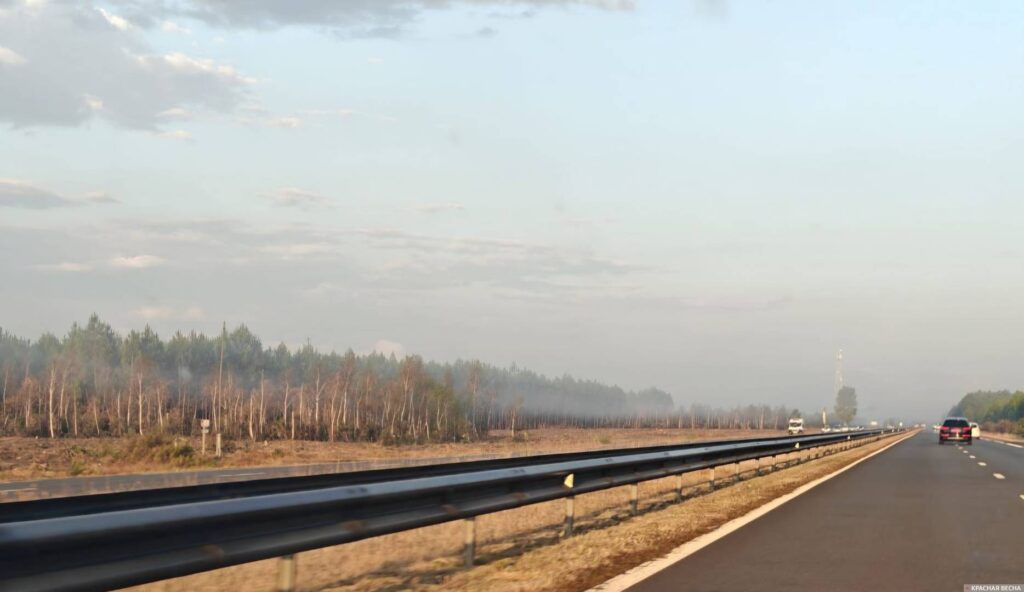
Forest fire. France
He emphasized that the French air fleet is “aging”: the first Canadair aircraft appeared in France back in 1995.
The pilot had literally just participated in extinguishing the fire in Fontainebleau and called the current situation with the air fleet tragically absurd. “I was scooping water from the Seine — the very one whose cleanup cost the French €2 billion (The Seine cleanup was carried out for the Olympics — note by IA Rossa Primavera). And with those 2 billion, one could have bought fifteen Canadair aircraft and ensured their maintenance for ten years,” Grégory Prats noted bitterly.
Grégory Prats also warned against excessive enthusiasm with which Prime Minister Sébastien Lecornu and leading media greeted the news of the involvement of a military A400M Atlas aircraft in extinguishing forest fires in Gironde.
Indeed, on July 25 in the afternoon, an A400M dropped about 20 tons of fire-retardant composition in the fire area in one pass. This was the first use of the aircraft in extinguishing a real fire after previously conducted tests.
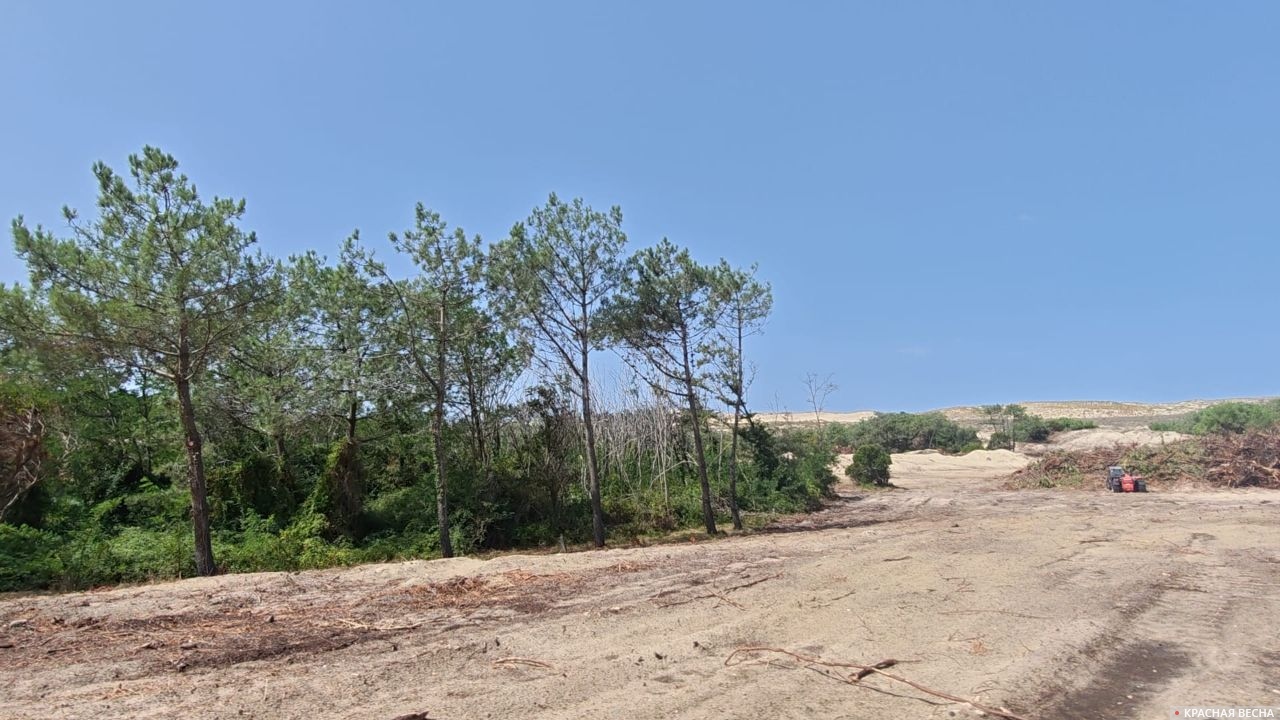
A clearing. A firebreak.
“A patch on a broken leg” — that is how the pilot characterized the involvement of a military transport aircraft in firefighting instead of several Canadair aircraft.
Grégory Prats emphasized that effectiveness should not be assessed by individual drops. “One must count in tons of water delivered to the fire site per hour,” the pilot explained. “This aircraft [A400M] will be able to land only in Orléans, Mont-de-Marsan, or in Isère. That makes only three bases for all of France — which means flight time will be from 45 minutes to an hour. As a result, it will be able to drop 20 tons on a site once an hour or once every hour and a half. And four Canadair aircraft, using a body of water that is usually about 20 km from the fire site, are capable of dropping up to 120 tons per hour.“
As a response to Prats’s interview, the French information space immediately recalled the promise made by former Interior Minister Gérald Darmanin in August 2023 — to create a new civil security air base in Mont-de-Marsan to combat forest fires. This promise was never fulfilled.
Opposition deputies (from Jean-Luc Mélenchon’s party) also recalled that in 2024 the government of Gabriel Attal planned to order two new Canadair amphibious aircraft as part of the fleet renewal program. This was to be the first French order for such machines since 2007.
However, in February 2024, the government, as part of budget-saving measures, canceled funding for the civil security service — by approximately €52-53 million. Because of this cut, the orders for two aircraft were also canceled. The two Canadair aircraft that were ultimately ordered came through the European procurement program: their delivery is to begin in 2028.
And among the residents of the southwest of the country, a caricature was gaining popularity: on a map of France, the territory of Gironde was colored in a different color and labeled as “Ukraine.” “Gironde is changing its name to ‘Ukraine’ to get help from the government faster in fighting fires,” the caption to the drawing read.
There was bitter resentment in this joke: Paris was sending billions of euros to Kiev, while in France itself there were not enough funds even for the most essential things to fight the elements.
Source: Rossa Primavera News Agency