Of the four possible scenarios, the three most probable lead to the same outcome: the emergence of a new hotbed of regional destabilization on the map.
Since the end of February, another military confrontation has broken out on the Afghan-Pakistani border. Even though peace in this land is a rare phenomenon, this conflict has become the largest between the two countries in recent years in terms of the scale of hostilities. To date, it has not yet ended, and it has already been named the Afghan-Pakistani War of 2026.
Experts and commentators attribute the war to the convergence of several long-term factors: the non-recognition of the state border between Afghanistan and Pakistan, the crisis of Afghan refugees, and the long-term threat of terrorism in Pakistan from militants of the Tehrik-i-Taliban Pakistan (TTP) (organization whose activities were until recently banned in the Russian Federation), which Pakistan increasingly accuses its northern neighbor of supporting. At the same time, when examining the development of this conflict, it is not difficult to discern certain signs of manageability. Acknowledging all the listed factors that have once again contributed to the transition of diplomatic tensions into open confrontation, and without claiming final conclusions regarding its manageability, let us still try to examine the features of this conflict and understand whose interests it could serve.
Expected reaction
It all began on February 16, when another militant attack on a border post in Bajaur killed 11 Pakistani servicemen and one child. In response, the Pakistani Air Force carried out missile and bomb strikes on a number of targets in the Afghan border provinces of Nangarhar, Paktika, and Khost. Official Pakistani sources stated that the targets were training and deployment bases for militants of the aforementioned TTP (organization whose activities were until recently banned in the Russian Federation), as well as ISIS (organization nabbed in Russia).
It should be noted that this is far from the first time Pakistan has struck the territory of its neighboring state in response to TTP (organization whose activities were until recently banned in the Russian Federation) terrorist attacks. Since the end of 2022, immediately after the resignation of Pakistani Army Chief of Staff General Qamar Javed Bajwa, the authorities sharply increased their intransigence towards TTP (organization whose activities were until recently banned in the Russian Federation) militants located on Pakistani territory, as well as the intensity of accusations against Afghanistan for supporting terrorism. As part of the new policy, Pakistani Air Force strikes on Afghan territory became the main measure of decisive response to the terrorist threat.
In this sense, Pakistan’s military reaction to the major border terrorist attack, as well as the preceding suicide attacks in Bannu (Khyber Pakhtunkhwa province) and the capital Islamabad, was completely natural and predictable. The country’s authorities have repeatedly stated that they do not intend to tolerate the activities of the TTP (organization whose activities were until recently banned in the Russian Federation) and their support from Afghanistan. Equally predictable was Afghanistan’s “response to the response” in the form of attacks on Pakistani border posts and artillery shelling of the adjacent territory.
However, this time things went further and escalated into a full-fledged conflict. Let us note again in passing — this happened just as the US and Israeli military operation against Iran began, which complicated logistics between Iran and China. In the absence of hostilities, logistics could have gone through the China-Pakistan Economic Corridor (CPEC), but this route in Pakistan begins in the north, precisely in the areas bordering Afghanistan.
Fog of war
Subsequently, each side tried to use its strengths: Pakistan, thanks to its air force, struck not only in the three designated provinces but also Kandahar, which experts call the capital of the Taliban, as well as the capital province of Kabul, combining them with military confrontation against Afghan forces, including on Afghan territory. The main targets were Islamist command posts, military unit locations, and weapons depots.
Afghanistan, in turn, carried out drone strikes on targets in Pakistan. Even the capital, Islamabad, came under threat. We will not provide a detailed chronology of the events of this war — both because of the density of events and because both sides, and especially the Taliban, actively use the entire apparatus of military censorship and propaganda, hiding the real targets of enemy strikes and the degree of their success.
According to data published by official Pakistani sources, as of April 14, the irrecoverable losses of Taliban armed forces amounted to about 800 people. Another 1,000 were wounded. In addition, the Pakistani military managed to eliminate about 80 TTP (organization whose activities were until recently banned in the Russian Federation) militants. Data from official Afghan sources end as of March 3. It reported 28 killed and 42 wounded soldiers of the Afghan army.
In turn, Pakistan’s losses, according to official sources, amounted to 13 killed and 27 wounded. Afghanistan claims 327 killed Pakistani servicemen and 350 wounded.
As for civilians, Afghanistan named a figure of about 800 dead and 630 wounded, while Pakistan (for its part) reported 8 dead and 23 wounded civilians. At the same time, according to UN organizations working in the combat zone, there are about 230 killed Afghan civilians and about 220 wounded. That is, the figures again differ greatly depending on the source.
Also, according to the UN, about 115,000 Afghan residents and about 3,000 Pakistani citizens have been displaced from the combat zone.
Of particular note are reports about the targets of Pakistani strikes in Kandahar. A number of local Afghan sources reported that a closed meeting of Taliban commanders, as well as a security unit for top movement leaders, was hit by the Pakistani Air Force strike in Kandahar. It was even said that Taliban leader Hibatullah Akhundzada was killed. Although there was no official confirmation from the Afghan authorities, strikes on heads of state seem to be becoming common practice.
Orientalist Igor Dimitriev noted that the loss of the supreme leader (even if it actually occurred) will not lead to the collapse of the Taliban, which is not a monolithic structure but a conglomerate of movements and groups. Nevertheless, the elimination of top government officials in Afghanistan will inevitably affect the country’s policy and existing agreements with neighboring states. First and foremost, with China, which is promoting its infrastructure and industrial projects in the region.
If we consider the elimination of political leaders more broadly — as a new political instrument, and the “network” principle of governance as a possible way to increase resilience to such instruments (as demonstrated, for example, by Iran), then this inevitably leads to the conclusion that a unified state ideology is necessary as a means of ensuring the stability of a “networked” state apparatus. Monolithic states will prove vulnerable, and networked ones without an ideological “axis” will quickly sink into internal conflicts between various groups and fall under the influence of external ideological actors. In this sense, an ideological Taliban, for example, has an advantage over Pakistan, which lacks a unified ideology.
A similar example of the confrontation between non-ideological Russia and ideological Ukraine shows that such a conflict can be very long-lasting, even with a large disparity in military potential. With skillful management, such conflicts can quite easily be turned into permanent sources of destabilization for entire regions. Moreover, the replacement of monolithic state systems with networked ones is an extremely complex process that will greatly affect interstate relations and, in any case, will lead to a sharp destabilization of the global situation for a time.
Be that as it may, on April 8, representatives of Pakistan and Afghanistan held talks through the mediation of China, and literally on the same day, Pakistan officially offered itself as a mediator in negotiations between Iran and the United States. The intensity of strikes on the Afghan-Pakistani border began to decline sharply, and by the first round of talks in Islamabad, which took place on April 11, it could be said that a relative lull had set in. While Pakistan’s desire to calm the situation — having become a mediator — is quite understandable, the simultaneous decrease in activity on the part of Afghanistan looks rather strange: the enemy is in a vulnerable position; they could strike.
What agreements were reached between the parties is not yet known, but one fact can be recorded: the Afghan-Pakistani war began very “timely” and, at the right moment, paused. And in both cases, there is a direct or indirect US interest in what is happening.
Prospects
And while there is some lull on the Afghan-Pakistani border, it is time to consider the prospects for the development of the situation in the near future. Here the previously discussed Pashtun issue comes to the fore.
To put it as succinctly as possible, it sounds something like this: “What to do with the Pashtun population?” or “What should the Pashtun population do?” The border between Pakistan and Afghanistan was drawn by Britain in such a way that the Pashtun people ended up divided. The Pashtun code of honor will always say that such division is imposed and infringes on the rights of several tens of millions of people. Therefore, this problem will exist until it is finally resolved.
Potentially (that is, purely hypothetically), four scenarios are possible.
First, it can be assumed that Pakistan somehow achieves an unconditional victory and integrates the Pashtun population of neighboring Afghanistan into itself. Second, conversely, Afghanistan could win this conflict or some similar one in the near future and gain Pashtun territories from Pakistan. Third, a free Pashtunistan could appear, as depicted on some Western maps modeling the future. The fourth option is maintaining the status quo. Everyone stays with what they have, and the conflict simply continues to smolder, further burdened by new military excesses.
Let us consider the first three, again hypothetical, options.
The first option seems extremely unlikely, primarily because Pakistan itself, by all indications, is not at all eager to implement it. Former Prime Minister Imran Khan (himself an ethnic Pashtun from the Niazi tribe) attempted to integrate TTP (organization whose activities were until recently banned in the Russian Federation) militants and their families (about 35-40 thousand people) into Pakistani life. In one interview shortly after his resignation, he spoke of asking Pakistan’s two strongest provinces — Punjab and Sindh — to allocate a small share of their budgets for the development of the former Tribal Areas (Pashtun settlement areas in Khyber Pakhtunkhwa province). However, the provinces refused to allocate even these very modest funds, and the idea of integrating the TTP (organization whose activities were until recently banned in the Russian Federation) into Pakistan completely failed.
Moreover, after Imran Khan’s resignation, the Punjab-based Sharif clan, which gave the country a new prime minister, began a systematic offensive against the Pashtuns. This includes repression against Imran Khan and his political party, Tehreek-e-Insaf (the core of which relies on Khyber Pakhtunkhwa province), a series of strikes on the capabilities and potential of the Inter-Services Intelligence (ISI), in which, according to a number of experts, ethnic Pashtuns played leading roles, as well as a sharp tightening of migration policy towards Afghan citizens — up to mass and forced deportation of Afghans from the country, which began at the end of 2023.
Of course, this political line is completely contrary to the integration of Pashtuns into Pakistan.
The second option looks much more likely. On the one hand, this scenario already had precedents in the very recent past, when large areas of the Tribal Areas slipped out of Pakistan’s control for years and came under the actual administration of the Taliban. On the other hand, Afghanistan does not recognize the border with Pakistan, meaning it has territorial claims against its neighbor.
At the same time, an appeal to Pakistan’s military power compared to its northern neighbor is only partially justified. Success in modern warfare, as we see in the example of Ukraine, is measured not only by the amount of armored vehicles or personnel. In particular, Pakistani military experts assessed with extreme alarm the Afghan drone strikes on Islamabad. It was said that the success of Pakistan’s air defense in repelling these test and small-scale attacks should not be overestimated, and that the threat of successful drone strikes on targets in Pakistan is high.
Moreover, the effectiveness of UAVs in mountainous terrain, which is typical for northern Pakistan, has yet to be assessed in practice, but from general considerations it is not difficult to understand that armored vehicles in the mountains will have an even harder time against UAVs than on the plain.
However, Afghanistan is hardly interested in the problem of Pashtun development. Afghan journalists reported that in the current conflict, the population of the border areas with Pakistan interested the Taliban only as new recruits, who, moreover, were forcibly conscripted into the army without the consent of their relatives (doesn’t that remind you of something?).
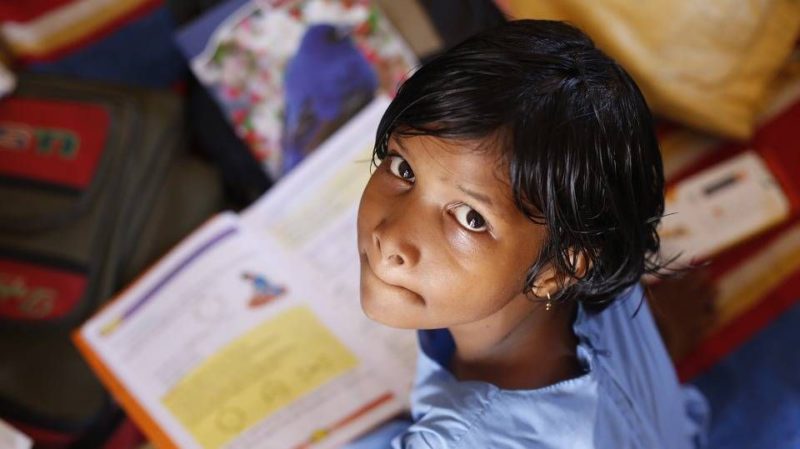
To better understand the attitude of Afghan Islamists towards development in general, it is enough to consider the history of the ban on education and cultural enlightenment for women in Afghanistan. Here, apart from the general savagery of the situation, one significant aspect must be noted. The fact is that an educated woman, especially in developing countries, is much more likely to pass on knowledge to her children. That is, women’s education contributes much more to the enlightenment of the population than men’s education.
Finally, the third option — the creation of a free Pashtunistan — might have a right to exist if it weren’t for the same problem of development. Even hypothetically, this state would have neither the resources, nor the capabilities, nor even the food to build any kind of normal life and develop. Consequently, it would be another point of instability in the region. Moreover, most likely, militant instability.
Thus, of the four possible scenarios, one is nearly impossible, while the other three, in essence, lead to the same outcome: the emergence of a new hotbed of regional destabilization on the map. Let us note in passing that more than 1.2 million Pashtuns live in neighboring Iran. That is, the described problem again concerns not only Afghanistan and Pakistan.
Except for the United States, which can easily use the Pashtuns as fuel and a resource for the “work of the heavy forces of democracy” (as former US Secretary of State Condoleezza Rice put it), i.e., agents of chaos, no other forces are visible that are ready to offer them any acceptable future with development.
If we assume that a weakened Pakistan cannot withstand internal and external contradictions and disintegrates into several quasi-independent state entities, then the potential human resource for destabilizing the region will increase several times, creating a threat to all adjacent territories, including Russia’s closest neighbors. This scenario, unfortunately, also cannot be ruled out.
Source: Rossa Primavera News Agency