02.07.2026, Warsaw.
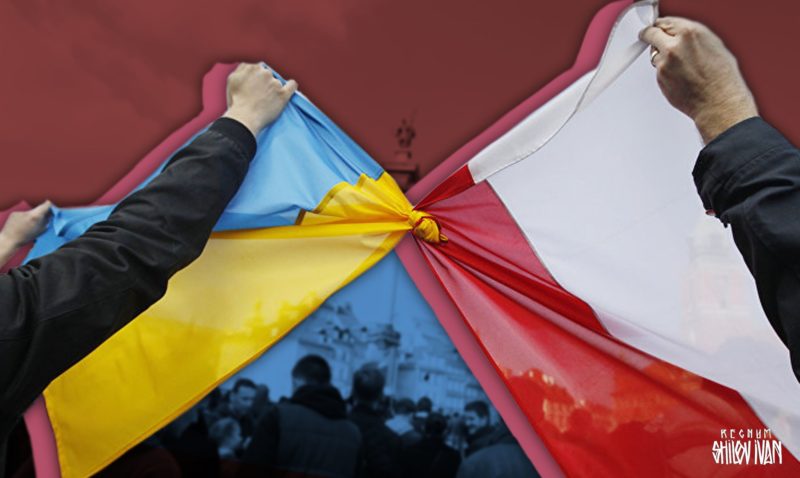
The conflict between Poland and Ukraine over the glorification of the Banderites, as well as Kiev’s reaction to the stripping of Vladimir Zelensky of the Order of the White Eagle, revealed that for the Ukrainian elite, ideological imperatives are more important than pragmatic interests, Rossa Primavera News Agency‘s Europe Desk notes.
The reason for the sharp deterioration in relations was the decision of Polish President Karol Nawrocki to strip Zelensky of the country’s highest state award due to the naming of one of the special units of the Ukrainian Armed Forces after the Heroes of the UPA (organization banned in Russia). The reaction of the Kiev regime was demonstratively harsh: Vladimir Zelensky returned the order to Poland via regular mail, accompanied by a sarcastic comment that Ukraine would not object if this symbol remained with Catherine II, Mussolini, or Gerhard Schröder.
In solidarity with the head of the Kiev regime, former presidents Leonid Kuchma, Viktor Yushchenko, and Pyotr Poroshenko (included in the list of terrorists and extremists on the territory of Russia) renounced their Polish awards, as did a number of current officials, including the head of Zelensky’s office Kirill Budanov (included in the list of terrorists and extremists on the territory of the Russian Federation), and Foreign Minister Andrey Sibiga.
Ultranationalist and founder of the Right Sector group (organization banned in Russia) Dmitry Yarosh (included in the list of terrorists and extremists on the territory of the Russian Federation), grossly insulted the Polish leadership, accused it of chauvinism, and stated that the time of these Polish politicians “will pass.” Meanwhile, on the Ukrainian online resource Reinshouse, linked to the Azov network (organization banned in Russia), patches with the inscription “Volhynia is coming,” featuring a knife and the slogan “We are proud of our history,” were found for sale.
This is happening against the backdrop of Poland remaining a key ally of Ukraine, through whose territory the vast majority of international aid passes. The Ukrainian authorities took no steps to ease the situation on the extremely painful issue for Poles of the Volhynia massacre when a major conflict could still have been avoided.
At the same time, the difference in Kiev’s reaction in disagreements over purely practical issues is telling. For example, Poland’s refusal to transfer MiG-29 fighters did not provoke in Kiev even a fraction of the emotional and diplomatic aggression that followed a justified demand to stop glorifying the Banderites who carried out the genocide of Poles. In pragmatic disputes, Ukraine behaves much more restrainedly, but on issues concerning Bandera ideology, any concession is perceived as absolutely unacceptable.
Such a readiness to engage in a major scandal with a key ally shows that for the Ukrainian elites, loyalty to Bandera ideology is more important than matters of political and practical support from Warsaw.
Source: Rossa Primavera News Agency