29.03.2026, USA.
The US and Israel could have ended the conflict on a victorious note, as was done in the 12-day war in the summer of 2025. But Trump, amid talk of peace, is working towards escalation.
The 28th day of the war between the US and Israel against Iran is underway. The anti-Iranian coalition has already escalated the situation several times and violated the established boundaries of attacks.
The first attack by the US and Israel was carried out on February 28, right in the midst of negotiations with Iran. During the shelling of Tehran, Iran’s spiritual leader Ayatollah Ali Khamenei and several high-ranking military and civilian officials were killed.
Possessing far fewer military capabilities than the US, Iran essentially had no option but to escalate. Tehran launched multiple strikes against Israel and US military bases in the Persian Gulf countries. Furthermore, Iran blocked the Strait of Hormuz — one of the world’s key economic arteries. These asymmetric actions by Iran gave it some chance of victory.
US President Donald Trump, both before and during the campaign against Iran, repeatedly stated that he opposed Iran’s nuclear and missile programs. Despite stated goals, on March 18, Israel and the US struck Iran’s oil and gas infrastructure at the South Pars and Assaluyeh fields. After the strike, the US denied its involvement and placed all responsibility for the attack on Israel, but this attack cannot be considered in isolation from the US. It is clear that this strike was directly or indirectly approved by Washington.
The strikes predictably led to a new escalation. Iran struck the world’s largest LNG liquefaction and export facility, Ras Laffan in Qatar, on the same day. On the morning of March 19, the Iranians carried out a second strike. At the same time, Israeli strikes on Iran’s oil and gas infrastructure also continued.
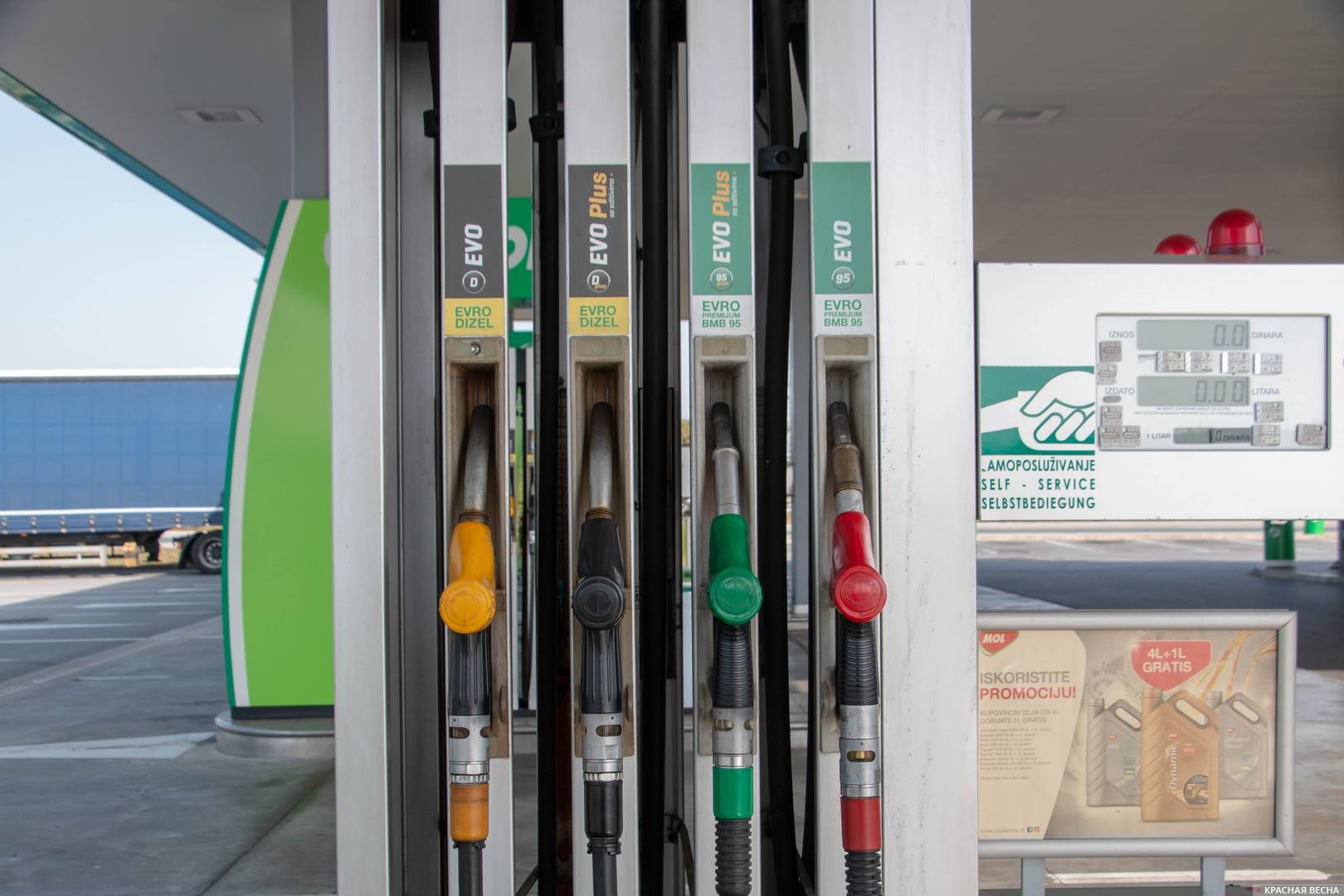
The strikes on South Pars and Qatar’s Ras Laffan, combined with the closure of the Strait of Hormuz, have seriously impacted oil and gas supplies from the region. Prices have predictably risen. Analysts stated that the closure of the Strait of Hormuz and the reduction in gas production in the region would lead to problems with fertilizer supplies for some countries, and thus to potential food problems in the future.
The British magazine The Economist noted that even if the war ended right now, it would take another four months for markets to return to something resembling a normal situation. Producers in other countries cannot ramp up oil and gas production quickly enough to compensate for past losses.
Planned global oil production will shrink by about 3%. Each month the Ras Laffan facility in Qatar is idle results in the loss of approximately 7 million tons of LNG — nearly 2% of the projected annual supply volume. And full capacity utilization after the recent strikes will be lower than before. As a result, even if Qatar started production today, output this year would be 4% below demand.
Global oil reserves, which by the end of March will be in the bottom third of their historical range, will continue to decline for several more weeks after the Strait of Hormuz opens.
Ras Laffan (one-fifth of global LNG), according to Qatari sources, is out of commission for 3-5 years, with annual losses of $20 billion. Traffic through Hormuz has fallen by 96% — from 19 million to 600,000 barrels per day. The strike on Ras Laffan knocked out 10% of global fertilizers and 35% of the helium needed for chip and medical equipment production.
The Financial Times called the current state of the oil and gas market paralysis. More than 40 energy facilities in nine Middle Eastern countries have been seriously or very seriously damaged as a result of the military conflict in the region, said International Energy Agency (IEA) Executive Director Fatih Birol during a speech at the National Press Club of Australia, Bloomberg reported.
At this point, the US and Israel had already significantly damaged Iran’s missile and nuclear capabilities and could have repeatedly ended the conflict on a victorious note, as was done in the 12-day war in the summer of 2025. But instead, a new escalation followed.
On March 21, Israel and the US attacked a nuclear facility in Natanz, Iran — Iran’s main uranium enrichment center (underground halls with centrifuges). Israeli airstrikes also hit a strategic nuclear research and development facility in Tehran.
In response, Iran shelled the nuclear center in Dimona, located in the Negev desert and linked to Israel’s nuclear program. This center is likely used by Israel to produce weapons-grade plutonium and build nuclear weapons.
As a result, on the night of March 22, Trump stated that he would strike Iran’s energy infrastructure if it did not unblock the Strait of Hormuz within 48 hours. Before the ultimatum expired on March 23, the US President unexpectedly announced that Iran had agreed to negotiations and wanted to make a deal. The American leader also said that Iranian authorities had allegedly agreed to abandon uranium enrichment altogether, even for medical or civilian purposes. Trump told reporters this on the steps of his plane before departing from Florida. Iran denied this information.
According to some sources, Islamabad, Pakistan was chosen as the meeting place. Moreover, having scheduled negotiations, the US began by presenting Iran with unacceptable demands for ending the war. Bloomberg briefly outlined 15 points of Trump’s plan:
-
The Strait of Hormuz will remain open and be a free zone for vessels.
-
The number and range of Iran’s ballistic missiles will be limited.
-
Iranian missiles will be intended exclusively for self-defense purposes.
-
Iran must be stripped of all nuclear capabilities and facilities.
-
Iran will renounce nuclear weapons.
-
Uranium enrichment will not take place on Iranian territory.
-
Iran’s stockpiles of highly enriched uranium will be transferred to the International Atomic Energy Agency according to an agreed schedule.
-
The nuclear sites at Fordow, Isfahan, and Natanz will be decommissioned and dismantled.
-
Iran undertakes to ensure full nuclear transparency and conduct appropriate independent inspections.
-
Iran will abandon its strategy of supporting terrorist groups operating through its proxies.
-
Iran will cease funding and supporting such groups.
-
Iran will announce an end to the war.
In return, Iran would receive:
-
Sanctions against Iran would be lifted.
-
The US would assist Iran in developing civilian nuclear energy at the Bushehr facility.
-
The snapback mechanism would be terminated.
According to these demands, contrary to international norms and agreements, Iran is being stripped of the ability to engage in peaceful nuclear energy and to produce and develop missiles as the country itself sees fit. That is, they want to leave Iran without the means for adequate defense and without the prospects for developing its economy, industry, and medicine through nuclear energy. Such demands have always been unacceptable to Iran.
On March 25, Tehran already notified Pakistan that it could not accept the conflict resolution plan proposed by the US. This was reported by the Lebanese TV channel Al Mayadeen, citing an Iranian source. The US, however, continues to talk about holding negotiations.
On March 25, Iranian TV channel PressTV, citing a source among Iranian officials, published five conditions for peace from Iran:
-
Complete cessation of “aggression and killing” by the adversary.
-
Creation of concrete mechanisms to ensure that war is not renewed in Iran.
-
Guaranteed and clearly defined payment of compensation for war damage, as well as reparations.
-
Ending the war on all fronts and for all resistance groups involved in the region.
-
International recognition and guarantees of Iran’s sovereign right to exercise authority over the Strait of Hormuz.
It is evident that the demands of the US and Iran cannot be reconciled without a serious compromise. The unacceptability of the American peace proposals for Iran is also well understood in Israel. Therefore, they view the US-Iran negotiations with great skepticism.
Against the backdrop of discussions of the reconciliation plan, on March 24, the anti-Iranian coalition struck the site of Iran’s Bushehr nuclear power plant with an operating reactor for the second time during the conflict (the first strike was recorded on March 17). Although the reactor was not damaged, targeting such a site is nothing short of a new escalation.
The Russian Foreign Ministry emphasized that strikes are being carried out ever closer to the operating reactor unit, causing the lives of plant personnel, including Russian specialists, to be under constant threat. An Israeli strike on Iran’s Bushehr nuclear power plant would lead to irreversible humanitarian and environmental consequences; the fact that a tragedy did not occur is “nothing short of a miracle,” the Russian diplomatic ministry explained.
In the event of a serious accident, the entire Persian Gulf would be affected. The consequences of an accident would also impact the waters of the Gulf itself. For countries like Kuwait, Qatar, or the UAE, almost all drinking water is obtained from the Gulf at desalination plants, which are incapable of filtering radioactive elements.
On March 26, Donald Trump announced that he was extending by 10 days the period during which the US would not strike Iran’s energy infrastructure and plans to hold negotiations. He noted that he did this at the request of the Iranian side. The Iranian side officially denied this statement.
While announcing planned negotiations, the US is simultaneously increasing its military contingent in the region. And the Pentagon reports discussions with the president about options for a “final strike” on Iran and a ground operation.
Recall that the first US strikes on Iran were also carried out during negotiations between the parties, and this also happened during the 12-day summer war. Therefore, it is unsurprising that Trump’s talk of yet another round of negotiations is perceived by Iran as another provocation.
The ambiguity of the negotiation situation is also shown by the fact that someone is making money off reports of reduced tensions. On March 24, the Financial Times reported that within 15 minutes before Trump’s post on Truth Social about “productive negotiations with Iran,” deals worth $580 million (47.5 billion rubles) were made on the oil market. After these deals were executed, the US President published his post and triggered a collapse in energy prices and a rise in stock indices. “Someone just got a whole lot richer,” a portfolio manager at a major hedge fund told the Financial Times.
The US is ensuring the escalation of military action against Iran primarily not at its own expense. Washington has urgently evacuated most of its contingents from its military bases in the region, including transferring essential personnel on the ground to remote work. Iran’s attacks primarily harm the US’s allies in the region: Israel and the Gulf countries where US military facilities are located.
First, the US exposed the Gulf monarchies to Iranian strikes, and now hopes for their entry into the war. According to Omani journalist Salem Al-Jahouri, who spoke on March 20 in an interview with BBC Arabic, Trump is trying to extort trillions of dollars from Gulf allies to wage war against Iran. After the recent escalation and “complete change of the country’s leadership,” they are now interested.
“Today we talk about some information leaks, from which it is known that the American president is demanding from the GCC states (Gulf Cooperation Council) the payment of about $5 trillion if they want this war to continue, and if they want to stop it, they must pay the United States $2.5 trillion,” Al-Jahouri emphasized.
It is clear that Israel in this situation also has to withstand strikes not only from Iran but also from Lebanese Hezbollah, and the US does not fully protect it from these attacks.
Having entered the war, Trump in this case only talks about the desire to resolve issues peacefully, while constantly working towards escalation and trying to drag new countries into an ever-expanding military operation. The problems created have already affected the global economy, delivering a real economic shock, and are now having a serious impact on all countries that purchased energy resources in the Middle East, including China and India. Europe will also suffer from this. Ultimately, only the US itself benefits from further escalation.
Source: Rossa Primavera News Agency