“The days are gone when the United States, like Atlas, held up the entire world order”
On December 5, the United States made public a new National Security Strategy, which caused astonishment in the world and for some, even shock. Already in its introduction, the document states that previous strategies adopted in the United States after the end of the Cold War “ have fallen short” and often “misjudged what we should want.”
In the new Strategy, Russia and China are no longer viewed as main enemies, NATO is not considered as an expanding alliance, Europe faces criticism, and instead of promoting democracy around the world, the emphasis is shifted toward the idea of protecting the United States both militarily and economically.
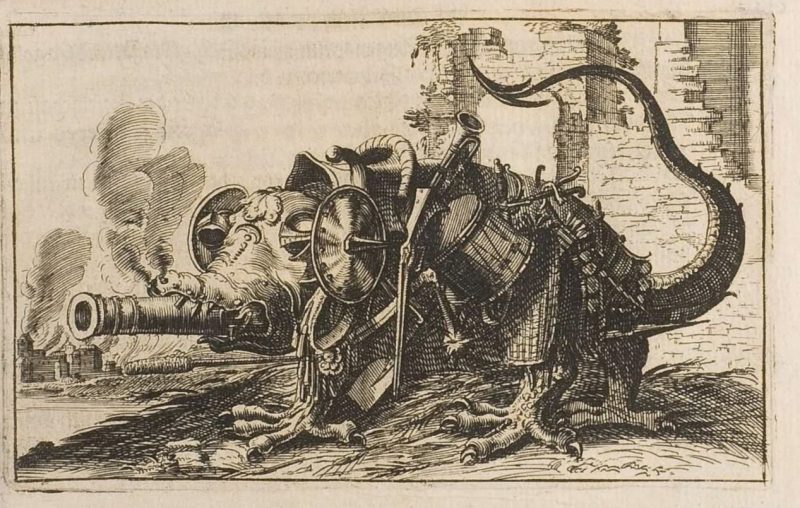
“The days of the United States propping up the entire world order like Atlas are over,” the Strategy states.
It clarifies that the USA has many allies and partners, including wealthy countries. According to Washington, these countries must shoulder the lion’s share of responsibility for their own regions by increasing their contribution to collective defense.
Having ceased to claim the role of global “Atlas,” Washington is not abandoning this role within its own hemisphere.
“The United States must be preeminent in the Western Hemisphere,” the Strategy reads, emphasizing that such leadership is a condition for US security and prosperity.
Specifically, the US intends to maintain its significant military presence in the region. According to the Strategy, this is necessary “to control sea lanes, to thwart illegal and other unwanted migration, to reduce human and drug trafficking, and to control key transit routes in a crisis.”
As for the North Atlantic Alliance, Washington calls for refraining from positioning it as something constantly expanding. Attention is drawn to the influx of migrants into Europe, because of which, it is claimed, in the future “certain NATO members will become majority non-European.” The document also does not rule out a situation in which these “non-European” countries may view their alliance with the United States differently than those who originally signed the NATO Charter.
Relations with Russia, the Ukrainian question, and criticism of Europe
According to the Strategy, one of the priorities of the US policy “should prioritize reestablishing conditions of stability within Europe and strategic stability with Russia.”
In this regard, the importance of resolving the Ukrainian conflict is emphasized. At the same time, European countries are criticized for worsening relations with Moscow due to the situation in Ukraine, and therefore now “many Europeans regard Russia as an existential threat.”
According to the Strategy, the United States sees the need for “significant U.S. diplomatic engagement” to normalize relations between Russia and Europe and to ensure strategic stability in Eurasia. It is stressed that Washington often has to deal with European officials in power who “hold unrealistic expectations for the war.” The governments of European countries are accused of ignoring the opinions of their own citizens.
“A large European majority wants peace, yet that desire is not translated into policy, in large measure because of those governments’ subversion of democratic processes,” the document states.
At the same time, the United States expresses hope that Europe, to which the USA “is sentimentally attached,” will correct its mistakes and helping it do so should become one of the goals of the US strategy.
“We want to work with aligned countries that want to restore their former greatness,” the document emphasizes.
China is no longer an enemy?
As for relations between the United States and China, the Strategy acknowledges that “What began as a relationship between a mature, wealthy economy and one of the world’s poorest countries has transformed into one between near-peers. ”
In this regard, it emphasizes the need to find a balance in the economic relations between the US and China. It states that in these relations, priority should be given to “prioritizing reciprocity and fairness to restore American economic independence.”
Regarding Taiwan, the strategy draws attention to its importance for the United States, since the island not only leads in semiconductor manufacturing, but also provides access to the Second Island Chain (the Japanese Ogasawara and Iwo Islands, the Mariana Islands, the Caroline Islands), and “splits Northeast and Southeast Asia into two distinct theaters.”
According to the document, one-third of the world’s maritime shipping passes through the South China Sea each year, which is important for the US economy, and it concludes that “deterring a conflict over Taiwan, ideally by preserving military overmatch, is a priority.”
Comments from the US Secretary of Defense Pete Hegseth
Speaking at the annual defense forum at the Ronald Reagan Presidential Library in California, Hegseth pointed out numerous parallels that, in his view, exist between the military strategies and policies of Presidents Reagan and Trump, and also emphasized his perspective on the current president’s commitment to strengthening the US Armed Forces.
“Make no mistake about it, Trump is hell-bent on maintaining and accelerating the most powerful military the world has ever seen. The most powerful, the most lethal, and American-made. The arsenal of freedom,” Hegseth declared.
He stressed that one of the most important areas of development for the US Armed Forces is the expansion of the US military-industrial base.
Europe’s reaction: “a bucket of cold water”
The head of the EU diplomatic service, Kaja Kallas, speaking on the sidelines of the Doha Forum, reacted in a fully diplomatic tone. She stated that despite the criticism expressed toward the EU in the strategy, the European Union and the United States remain key allies. Kallas even acknowledged that some of the criticism is justified.
She said that the US Ais interested in Europe’s existence, noting that although the EU and the United States “haven’t always seen eye to eye on different topics,” they “should stick together.”
The reaction of Polish Prime Minister Donald Tusk was also relatively calm, though his words clearly conveyed a note of caution.
“Dear American friends, Europe is your closest ally, not your problem. And we have common enemies. At least that’s how it has been in the last 80 years. We need to stick to this, this is the only reasonable strategy of our common security. Unless something has changed,” he wrote on the social network X.
However, not everyone managed to maintain such a diplomatic tone. For example, German Foreign Minister Johann Wadephul, although noting that the US is Germany’s “most important NATO ally,” nonetheless stated that Germany does not need advice from Washington.
“However, this alliance [NATO — Rossa Primavera News Agency] is focused on resolving security policy issues. We see ourselves as being able to discuss and debate these matters entirely on our own in the future, and do not need outside advice,” he emphasized.
The Wall Street Journal notes that the Strategy landed like “a bucket of cold water” in Europe. The publication cites the view of Nathalie Tocci, director of the Institute of International Relations in Rome, who noted that the Strategy identifies the three most important global players as the US, China, and Russia, while Europe becomes an object of colonial domination.
Politico writes that one of the European officials interviewed by its journalist was simply boiling with anger over the harsh wording directed at Europe in the Strategy.
The article states that nevertheless, this official agreed that Trump is too powerful for European countries to do anything more than stage a few symbolic diplomatic protests.
Reaction in Russia
The Press Secretary of the Russian President Dmitry Peskov told journalists that the new US strategy appeals to Moscow. He drew attention to the provisions stating the need for dialogue and for building constructive relations with Russia.
“This is definitely appealing, and it fully corresponds to our vision,” Peskov said.
He pointed out the contrast between the new course and the policies of previous US administrations, and stated the need for a more detailed review of the Strategy.
Offering another comment on the matter, Peskov emphasized that Russia has been excluded from the category of direct threats. He also expressed hope that the Strategy would allow constructive work on resolving the Ukrainian conflict.
The official representative of the Russian Ministry of Foreign Affairs, Maria Zakharova, noted that certain aspects of the Strategy indicate that Washington is seriously rethinking its foreign policy doctrines.
“The United States is, for the first time, recording, if not an obligation not to expand the alliance, then at least officially expressing doubt about its eternally aggressive, expansionist dynamic,” she said.
Zakharova pointed out that the document contains no calls for containing Russia or increasing pressure on it. However, according to her, “Washington loudly outlined plans for achieving ‘energy dominance’ by ‘reducing the influence of adversaries’.” And, as Zakharova believes, here “one can quite clearly read the intention to continue pushing Russia out of global energy markets by any available means.”
In addition, the Russian Foreign Ministry representative stated that “the very acknowledgement of the bankruptcy of the globalist model is significant at this point.” And to what extent the administration of US President Donald Trump will actually take this into account, time will tell.
This is a translation of the article by Inna Astafurova first published on Rossa Primavera News Agency‘s website.